UK Democracy Bulletin, July 2026

Issue #82 — July 2026
Monthly news, jobs, grants and gossip from across the democracy sector, brought to you by the UK Democracy Network. Read by 450+ UK democracy organisations. We read everyone’s newsletters & research so you don’t have to. If you want us to cover yours, let us know: james@democracynetwork.org.uk
How you can get involved right now! Do these things 👇
- Join the Democracy Network
- See the latest democracy jobs & add your own
- Check available democracy funding
- Explore the Democracy Map
- Subscribe to the UK Democracy Announcements Mailing List
Highlights
- Andy Burnham promises ‘biggest rebalancing of power the country has ever seen’
- Democracy for Sale reveal Burnham’s chief of staff arranged undeclared lobbying access
- Labour for a New Democracy rally 140 MPs behind National Commission on Electoral Reform
- Ethics and Integrity Commission lobbying and standards review lands Thursday 9 July
- Association of Electoral Administrators warn of a wellbeing crisis among elections staff
- Terror-law reviewers warn state threats bill could catch journalists and NGOs
- Democracy Club log record 10 million postcode searches at 2026 elections
Democracy Jobs
Featured Job Listings across the Democracy Sector. View the full database of upcoming job listings here — have we missed any? Add them via this form.
Rolling deadlines
- Multiple roles: Association of Democratic Services Officers
- Rolling deadline: Board Member at Tactical Tech
- Rolling deadline: Operations Director at Tactical Tech
- Rolling deadline: Fundraising Manager at Fawcett Society (£40,000)
- Rolling deadline: Campaigns & Content Manager at Fawcett Society (£40,000)
- Rolling deadline: Media and Communications Manager at Transparency International
Featured upcoming roles
- Apply by July 6: Director of Scottish Fabians at The Fabian Society (£48,410–51,315)
- Apply by July 6: Investigative Journalist at Liberty
- Apply by July 8: Media and Communications Officer (Two Roles) at Liberty
- Apply by July 10: Senior Finance Officer at Disability Action
- Apply by July 10: Administration Officer (Onside Evolution) at Disability Action
- Apply by July 12: Digital Content Editor at IPPR (£37,976–£48,644)
- Apply by July 13: Executive Officer (Part-time) at Public Law Project (£31,318.48)
- Apply by July 13: Membership Officer at Locality (£35,995–40,194)
- Apply by July 14: Movement Building Lead at Economic Change Unit (£49,804)
- Apply by July 14: Grants Officer at The Legal Education Foundation (£33,728)
- Apply by July 19: Research Manager at More In Common (£45,000–55,000)
- Apply by July 19: Head of Communications at Ubele Initiative (£42,000–52,500)
- Apply by July 19: People & Operations Manager at New Economy Organisers Network (£48,524)
- Apply by July 20: Senior Programmes & Communications Manager at Patchwork Foundation (£35,000)
- Apply by July 20: Independent Director at Sortition Foundation
- Apply by July 21: Communications & Research Officer for Katy Clark MSP at PACT — Scottish Parliament
- Apply by July 29: Head of Office for Jenny Young MSP at PACT — Scottish Parliament
- Apply by August 3: Senior Clerks, Committee/Chamber Office at PACT — Scottish Parliament
- Apply by August 10: Director at Resolution Foundation (£90,000)
Spotlight: Burnham Watch
As heir presumptive following his Makerfield Byelection win, attention has turned to what an Andy Burnham premiership may mean for power, devolution and accountability

Burnham unveils ‘Number 10 North’ announces ‘biggest rebalancing of power our country has ever seen’
Speaking at Manchester’s People’s History Museum, Andy Burnham MP -widely tipped to be Prime Minister within weeks - declared Westminster ‘broken’ and called for change ‘in how Britain is governed, not just who governs it’. Partly based on his book Head North, written with Liverpool Mayor Steve Rotherham, Burnham’s blueprint includes a Manchester-based ‘Number 10 North’ to push power and resources out to mayors and local authorities - plus greater public control of water, housing, energy and transport, and a hint at a German-style legal duty to equalise funding across the regions. Read the Guardian’s report on the speech and its analysis of the sweeping new mayoral powers - over social care, childcare, skills and health — being drawn up to deliver it.
Burnham advisor Josh Simons told his account of the journalist monitoring was ‘wrong in numerous important respects’, Democracy for Sale reveals
A Democracy for Sale investigation by Peter Geoghegan and Khadija Sharife reveals that lawyers for PR firm APCO privately told Josh Simons — who resigned from the Cabinet Office over paying the firm to investigate journalists, and who now co-leads policy for Andy Burnham’s team — that his public account of the affair was ‘wrong in numerous important respects’ and ‘inconsistent with the facts’, having privately called their report ‘incredibly useful’. Green MP Siân Berry is calling for a full investigation into whether Simons breached the Ministerial Code, while Nik Williams of Index on Censorship says the monitoring of journalists is ‘not a tactic that we should see in a democracy’ and that the public is ‘entitled to total transparency and accountability to ensure it cannot happen again’. The NUJ is demanding ‘proper scrutiny and full transparency’ — read the full investigation on Democracy for Sale.
Citizen Network’s Simon Duffy sets out an agenda for ‘radical devolution of power away from Westminster’
In his essay Next Steps for the King of the North, Citizen Network Director Simon Duffy argues the moment demands structural change rather than simply a change of personnel, whoever holds №10. Creeping poverty, insecurity and a deepening sense of injustice demand a proportionate response, Duffy says, highlighting Burnham’s announcement of radical devolution away from Westminster, with community power and public services ‘rooted and accountable to local communities’ as a ‘hopeful path’ at a time when the stakes could not be higher, he says.. Read Simon’s full essay.
New Statesman’s Alex Niven argues Burnham’s Makerfield win could push radical regional devolution onto the agenda
Writing in the New Statesman after Andy Burnham’s Makerfield by-election win, Alex Niven (author of The North Will Rise Again) argues that beneath the ‘King of the North’ branding sits a serious constitutional-regionalist agenda aimed at the UK’s entrenched North-South divide. He points to the Head North manifesto — an elected Senate of the Regions to replace the Lords, a German-style ‘basic law’ guaranteeing fair regional funding, a written constitution, voting reform and expanded regional fiscal powers - as a blueprint for rebalancing power away from Westminster. Read the piece.
Localis weigh Burnham’s ‘Number 10 North’
In a chief executive’s note, Localis’ Jonathan Werran weighs Andy Burnham’s plan to ‘rewire the state’ around place-based collaboration — arguing the prize hinges on prising economic policy from an over-centralised Treasury and on Burnham’s choice of chancellor, and warning that past attempts, from Wilson’s Department for Economic Affairs to the stalled Levelling Up agenda, foundered on Treasury intransigence. Their report Everything in its right place makes the case for a universal fiscal devolution roadmap for all strategic authorities. Read Werran’s note and the report.
UCL Constitution Unit argue Burnham Number 10 needs fewer — and more transparent — special advisers
Professor Robert Hazell, founder of the Constitution Unit, argues that if Andy Burnham reaches Number 10 he should shrink its team of special advisers — quadrupled from 10 under Thatcher to more than 40 today — in favour of a smaller, more experienced operation. He also revives the Committee on Standards in Public Life’s call to publish job descriptions and CVs for senior advisers (they argued this in 2001). Read the full story on the Constitution Unit’s blog.
Demos welcome Burnham’s devolution turn — and make the case for a ‘democratic delivery model’
Demos chief executive Polly Curtis has welcomed Andy Burnham’s vision as flipping Keir Starmer’s approach — ‘a clear strategy’ that shifts power away from Whitehall — while cautioning that turning it into a deliverable platform within weeks is ‘a herculean task’. Their New Deal essay Public Service reform: a new democratic delivery model, by Joe Martin, Associate Director of Policy, argues that devolving power from the centre and empowering frontline workers and local institutions can move government ‘from a democratic doom loop towards a democratic hope loop’. Read the essay.
openDemocracy report Burnham plans to make lobbyist James Purnell his chief of staff
openDemocracy report that Andy Burnham intends to make James Purnell — the former Labour cabinet minister who resigned as CEO of corporate lobbying firm Flint Global the day the story broke — his chief of staff should he become Prime Minister. Green Party leader Zack Polanski has called for Flint’s full client list (which has included Uber, Amazon, BP, Airbnb and Apple) to be published, asking whether Burnham would be willing to take on the corporations Purnell was paid to represent. Read Ethan Shone’s report.
Common Knowledge outline ‘New Order Manchesterism’ narrative and policy playbook
Common Knowledge has drafted New Order: Manchesterism, the End of Neoliberalism, a narrative, comms and policy paper for an incoming Burnham administration, framed around ’15 weeks of de-privatisation’. The core argument of the playbook focuses on policy that should treat people ‘like adults and agents in their own lives, not reduced to passivity or spectatorship’.
The paper details a range of prospective policies, from a publicly owned ride-hailing platform co-governed by drivers, devolution powers empowering local democratically run cooperatives providing local services, to an Irish-style basic income for artists. The paper comes with its own soundtrack (‘read this while listening to New Order… it should feel like the future. It should feel joyful’). Follow Common Knowledge for updates.
Democracy for Sale reveal Burnham’s chief of staff ran undeclared lobbying access for corporate clients
A Democracy for Sale investigation by Peter Geoghegan and Adam Bychawski finds that James Purnell’s firm Flint arranged a March 2025 roundtable between Labour minister Douglas Alexander and corporate clients including Uber, Amazon and Diageo — while declaring almost no lobbying to Westminster’s watchdog across five years. Emails show Flint picked the attendees, set the agenda and hosted the event at its own offices. Green Party deputy leader Rachel Millward has called for Flint’s full client list and all ministerial meetings to be published — read the investigation.
Calls to Action
Consultations to respond to, open letters to sign, convening to follow and collaborators wanted
Working on the Representation of the People Bill? Join the Elections Bill Hub
Kyle Taylor of Fair Vote UK and a range of organisations are working together to coordinate around the bill. Activity is proceeding at pace, so if you’re working on the bill, contact Kyle to get involved.
Working in Wales? Join Democracy Group Cymru
Democracy Group Cymru is an information sharing network among organisations working in Wales, convened by Democracy Classroom and the Electoral Reform Society Cymru. So if you’re working on democracy in Wales, don’t miss out on opportunities to share your work, connect with others and collaborate — Join now.
Social Change Lab and Fossil Free London need you — Have your say on UK protest rights
Here’s something really useful you can do for democratic rights in the UK, and it takes only 5 minutes. Social Change Lab and Fossil Free London would love you to tell them (anonymously) about your experiences and feelings around protesting in the UK. If you’ve ever attended, or considered attending, a protest, this survey is for you. Your answers will help shape movement strategy and contribute to a parliamentary inquiry on protest laws. Complete the survey here.
UK Government opens call for evidence on 7th Open Government National Action Plan
The government is seeking ideas from civil society and the public for its next National Action Plan for Open Government, covering transparency, accountability, open data, digital governance and public participation, with no limit on the number of submissions. Find out more information about you can submit your ideas.
Funding & Grants
New grants awarded, funds opening, and money flowing into the work
Esmée Fairbairn Foundation opens youth-led creativity funding for Scotland, Wales and Northern Ireland
Esmée Fairbairn Foundation is opening a new youth-led creativity fund for arts and culture organisations in Scotland, Wales and Northern Ireland whose work is led by and for young people underrepresented in the sector. The Foundation expects to make over a dozen grants over the next two years, with applications accepted on a rolling basis. Register for the Q&A webinar on 16 July. Also, Esmée Fairbairn Foundation is looking to appoint two new Trustees to its Board — Applications close on 20 July.
The Henry Smith Foundation launches its 2026 funds after giving £61.9m last year
The Henry Smith Foundation — one of the UK’s largest independent funders — is launching its 2026 funding programmes, having awarded £61.9m to more than 900 organisations reaching 410,000 people in 2024. Their funds focus on support for racially minoritised young people, LGBT+ groups, refugees, people seeking asylum and other migrants. Find out more.
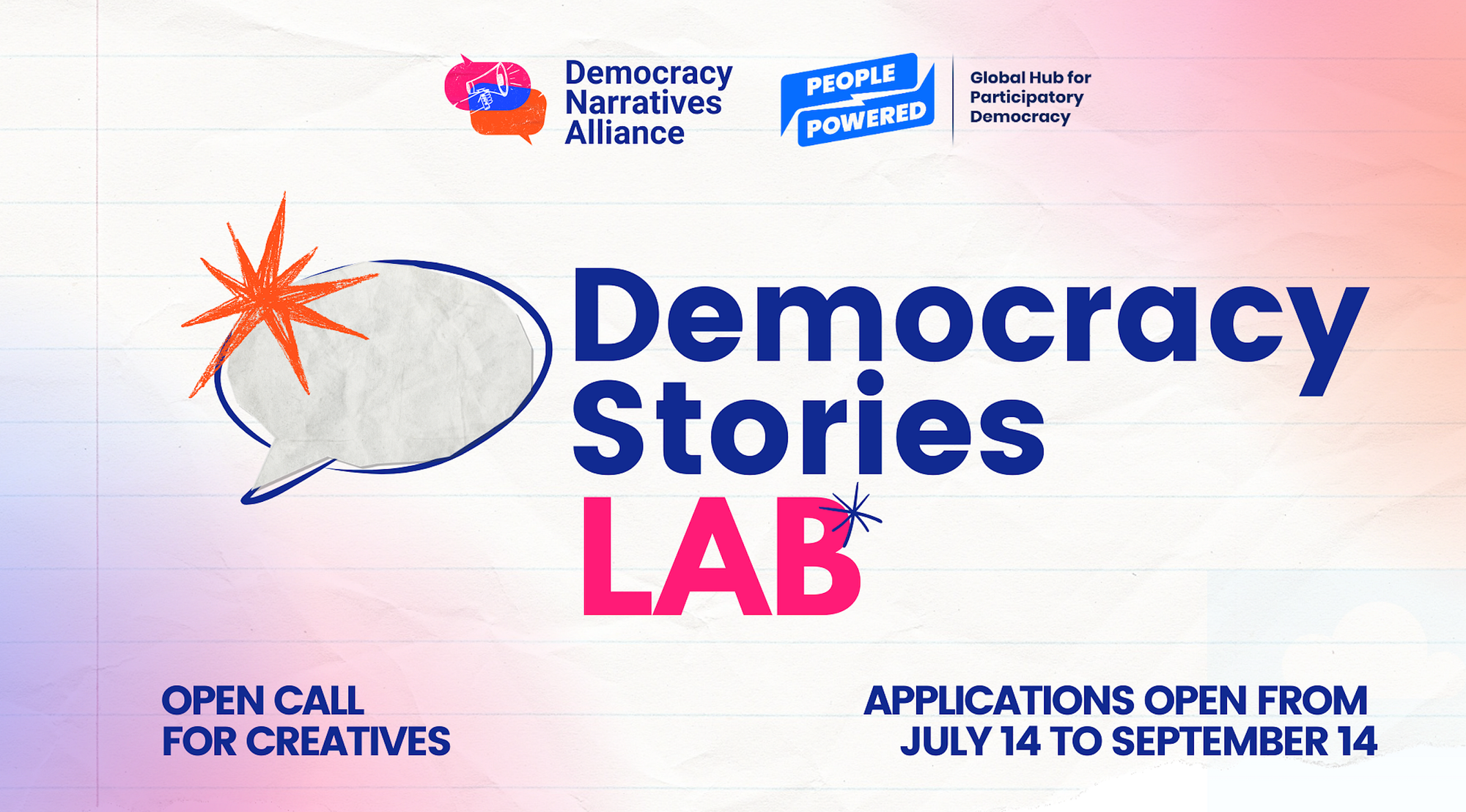
People Powered open the Democracy Stories Lab, a global creative competition to reframe democracy
People Powered and the Democracy Narratives Alliance are launching the Democracy Stories Lab, a worldwide competition for videos, illustrations or graphics that tell fresh stories about voice, fairness and what happens when ordinary people hold real power. Four winners receive $1,000 and five honourable mentions $500, with entries amplified through the Alliance’s partner networks and a global screening. Applications open on 14 July and close on 14 September — apply via the Democracy Stories Lab page.
Seeds of Liberation offer free grant writing workshops
Grant writing doesn’t have to feel inaccessible. Whether you’re an artist, organiser, researcher, mutual aid collective, or someone with a vision for your community, this workshop offered by Seeds of Liberation is designed to help you build the skills and confidence to pursue funding without compromising your values. The training takes place over a series of Zoom calls in July — Would you like to know more?
Events & Convenings
What’s coming up: summits, festivals, training, coworking and gatherings worth turning up to
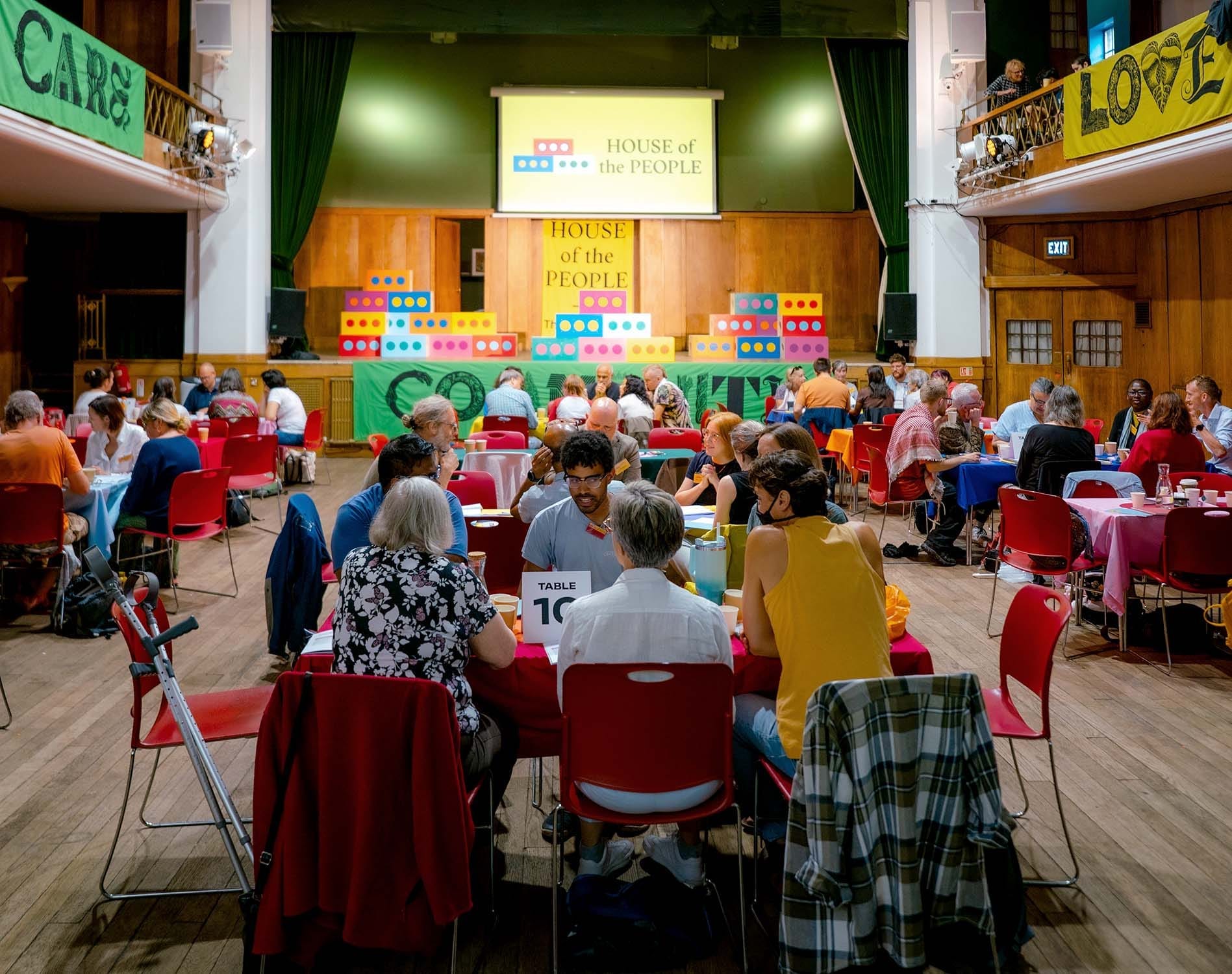
Regular Democracy Drinks in Edinburgh
Involve’s Kelly McBride and Paul Hirmis are running regular democracy drinks events in Edinburgh, check their Luma events page for the latest. Contact Involve for more information.
Upcoming conference on democratic futures and innovation, 6–8 July
The Participatory and Deliberative Democracy Specialist Group of the Political Studies Association, and the Centre for Democratic Futures are joining forces to revive, for the first time since 2018, a participatory and deliberative democracy conference. This year’s theme is Democratic Innovations, Democratic Futures. Register now and catch the conference.
Citizen Infrastructure Builders Club held first online Demo Day, showcasing tools for collective action
The Citizen Infrastructure Builders Club (CIBC), fiscally hosted by Social Change Nest, research and build what they term ‘citizen infrastructure’ that underpins solidarity and collective action. CIBC held their first online Demo Day last Friday. Five builders presented prototypes including a build-in-public knowledge base of 100+ plain-language articles on democratic innovation.
Elect Her run new workshops to get more women standing for election
Elect Her is ramping up its free online training for prospective candidates, noting that just a third of current councillors are women. Four Wales-focused workshops run in July, with further dates for Scotland and England to follow in September — Book the workshop that suits you. Elect Her are also working with Zoe Franklin MP and the Women’s Democracy Group (WDG) on amendments to the Representation of the People Bill.
Elect her will also be hosting an event with Jo Cox Foundation and Centenary Action, and all WDG members, in the Lords, in Sept or Oct (TBC) — stay tuned for updates.
The Citizens convene two hearings pressing for a public inquiry into Russian interference
The Citizens are hosting two free events in Parliament and central London tomorrow Tuesday 7 July, building the case for a full public inquiry into Russian interference in British politics. Speakers include Dominic Grieve, Lord Wallace of Saltaire, Ellie Chowns MP, Marina Litvinenko, Carole Cadwalladr and former MI6 officer Christopher Steele. Places are free but limited — register your interest by emailing info@the-citizens.com.
Campaign Lab convene one-day ‘AI & Campaigning’ conference in London, 16 July
Campaign Lab is bringing together the people building, funding and deploying AI in campaigns at Newspeak House in London on Thursday 16 July, for live tool demos and Chatham House-rule panels. Sessions ask whether AI can mimic voters well enough to replace asking them, and whether AI persuasion actually works in real campaigns, with speakers drawn from YouGov, Higher Ground Labs and beyond. Places are limited and approval is required — request a spot now.
Electoral Integrity Project hosts online elections conference, 6–9 July
The Electoral Integrity Project holds its annual elections conference starting today til 9 July — free, entirely online, and gathering scholars, election officials and civil-society researchers around contestation, deliberation, participation and electoral justice. Co-convenors Holly Ann Garnett, Toby James (University of East Anglia) and Anthony DeMattee (The Carter Center) have lined up eight thematic panels and two practitioner roundtables, with former election chiefs Lorenzo Córdova Vianello (Mexico) and Jean-Pierre Kingsley (Canada) among the speakers. Register free now.
International Observatory on Participatory Democracy marks its 25th conference with ‘hope and renewal’ in Kraków
The International Observatory on Participatory Democracy (OIDP) holds its 25th annual conference in Kraków, Poland, from 21–23 September, on the theme ‘Hope and renewal in the face of a global crisis of democracy’. Political leaders, practitioners, academics and civil society from around the world will tackle citizen participation in crises, embedding deliberation in representative government, and local government as a laboratory for democratic innovation — with a Political Declaration to adopt and the OIDP Awards to vote on. Register via oidp.net.
Consul Democracy heads to Munich for its 2026 conference on open-source digital democracy
The Consul Democracy Foundation — whose open-source platform powers participation and direct-democracy processes worldwide — is co-hosting its 2026 conference with the City of Munich from 15–17 September, covering digital democracy, open-source technology and democratic empowerment. Expect demo runs, workshops on designing participation processes, and speakers including Roman Huber (Mehr Demokratie), Sophie Bloemen (Commons Network) and Joe Mathews (Democracy Local). Tickets are donation-based via Open Collective — find out more and book.
Assemble host online forum on slashing political corruption, Thursday 9 July
Grassroots campaign Assemble holds the second of its online Charter Forums on Thursday 9 July at 7pm, this one on how to slash political corruption — each forum digs into a top-ranked demand from the first sitting of the House of the People. Speakers are Guardian columnist George Monbiot, Green Party Westminster leader Dr Ellie Chowns MP, and Kamila Kingstone, who leads the Defending Democracy Programme at Spotlight on Corruption. Register via the event page, or read the People’s Charter first.
Stevenson Trust for Citizenship plays matchmaker between democracy organisations and academics in Glasgow
The Stevenson Trust for Citizenship at the University of Glasgow are running a one-day workshop on Friday 4 September pairing civil society and democracy-sector organisations with academics, so each can find the evidence, expertise and collaborators the other has to offer. Drawing on the UK Democracy Network’s own guide to academic-practitioner collaboration, the day features sessions with sector funders and structured matchmaking conversations, with a small travel and accommodation bursary for the 10–12 organisations selected. Express interest by emailing Professor Christopher Carman (christopher.carman@glasgow.ac.uk) by Friday 31 July and view the Call for Expressions of Interest.
Research, Reports & Tools
Fresh thinking, new evidence and practical resources to put to use
Common Wealth and Mainstream set out ‘Productive State’ blueprint for public ownership
A new paper from Labour-aligned pressure group Mainstream, produced by Mathew Lawrence and Alex Williams of think tank Common Wealth, argues government should take direct public ownership of essential sectors such as water, energy and housing rather than relying on regulation or welfare transfers alone. The paper proposes arm’s length public corporations with worker and community representation, distinct from the post-war era nationalisation agenda, and points to former Greater Manchester Mayor Andy Burnham’s programme, including the Bee Network bus franchise, as a working model for what it calls “the Productive State.” Read the report here.
99% Organisation publish ‘Defensive Constitutional Reform’, a blueprint to defend UK democracy from executive overreach
The 99% Organisation, with Open Britain and Unlock Democracy, has published Defensive Constitutional Reform — launched in Parliament in late April — setting out safeguards against democratic backsliding and the abuse of executive power. It draws on Professor Andrew Blick of King’s College London and his scenario study Could it Happen Here? The Day a Prime Minister Refuses to Resign, arguing the UK’s largely unwritten, convention-based constitution leaves it dangerously exposed should a future government simply choose to ignore the rules. Download the full report now.
Involve and partners launch the report of the island of Ireland’s first cross-border Citizens’ Jury
Two Sides, One Conversation: a story of cross-border democracy, the final report of the Carlingford Lough Citizens’ Jury, launched on 26 June — the first time residents from both sides of the Irish border were selected by democratic lottery to reach a verdict on their shared landscape. Convened by The Wheel and NICVA under the Creative Ireland-funded Shifting Tides project, the jury set out recommendations on balancing nature recovery with the economic futures of communities around the lough. Read the report to see what cross-border democracy looks like in practice.
Westminster Foundation for Democracy publish evidence that democracy underpins security
Two new independent evidence reviews commissioned by the Westminster Foundation for Democracy argue that democracy is not merely compatible with security but central to delivering it — a timely input at a moment when security dominates the agenda. Presented at the European Partnership for Democracy Annual Conference in Brussels on 9 June, the pair comprise Democracy as a security asset by Katharina Merkel, synthesising more than 30 years of scholarly research globally, and a second review applying that evidence to the European context. Read the reviews on WFD’s site.
Royal Holloway and WFD warn TikTok’s design poses risks to democratic participation
A new briefing from the London Social Media Observatory at Royal Holloway, University of London, produced with the Westminster Foundation for Democracy, finds TikTok’s highly personalised feeds can fuel polarisation while moderation standards, media-literacy support and researcher access to platform data lag behind. Drawing on a roundtable of 45 policymakers, academics and civil-society figures, lead author Dr Andreu Casas and WFD’s Head of Elections Tanja Hollstein call for more transparent moderation, greater oversight of polarising content, and proper data access for researchers. Read the briefing on WFD’s site.
DemocracyNext publish two studies of how multilingual citizens’ assemblies work across Europe
DemocracyNext has released two new papers on language and technology in transnational deliberation. James MacDonald-Nelson and Hannah Terry give a first-hand account of a citizens’ assembly in Esch-sur-Alzette, Luxembourg, where AI transcription and translation helped bridge language groups, while Hugh Pope draws on interviews with interpreters and members of the EU’s 24-language citizens’ panel. Two more land in July — ‘Deliberative Muscles & AI’ on 9 July, and a report on citizens’ assemblies as democratic infrastructure on 15 July — via DemocracyNext’s Substack and LinkedIn.
Ethics and Integrity Commission publish their review of lobbying and standards on 9 July
The Ethics and Integrity Commission — the standards body commissioned by the Prime Minister to examine lobbying, financial disclosure, Business Appointment Rules and access to government — publishes the report of its review on the morning of Thursday 9 July, with the findings going up on its website that day. Unlock Democracy director Tom Brake, who has worked closely with the Commission on its lobbying proposals, flags it as one to watch.
AKO Storytelling Institute find games can build disinformation resilience among the most disengaged audiences
A new report from the AKO Storytelling Institute at University of the Arts London, with More in Common, finds games can reach audiences most disengaged from mainstream media and most susceptible to disinformation. Rather than drilling facts, it backs ‘psychological literacy’ — helping players see how beliefs form and how emotion and social dynamics shape what we accept as true — and finds games that respect player autonomy, prioritise enjoyment and stay politically neutral work best. Read the ‘On Their Terms’ report and watch the film.
House of Commons Library publish fresh primers on parliamentary confidence and monarchy finances
The House of Commons Library team has published two new briefings: Commanding confidence explains what ‘confidence of the House’ means in the UK’s largely unwritten constitution — how it is tested, and what happens when a government loses it — while Finances of the Monarchy, updated 5 June, sets out the Sovereign Grant, the Duchies of Lancaster and Cornwall, and royal tax arrangements. Read both via the Commons Library.
Shared Future and People Powered refresh their guide to participatory budgeting in social housing
Shared Future CIC has refreshed its practical guide to participatory budgeting in social housing — first published in 2019, updated in July 2025 by authors Jez Hall and Alan Budge, and shared through the global People Powered network. Housing associations, co-operatives and councils, it argues, are uniquely placed to give tenants a direct say over how money is spent — turning a ‘complaints culture’ into collaborative decisions on rents, repairs and improvements. Download the guide now.
People Powered share Greater Manchester’s Participation Playbook, a ‘game box’ for local democracy
Greater Manchester has a new Participation Playbook — a ‘game box’ of methods for residents, policymakers and organisers to co-produce solutions on health, housing and public safety. Commissioned by GM Live Well and created by participatory-democracy practitioners including The People Act and Shared Future CIC, with lead authors including Katy Rubin and Jez Hall, it sets out ‘rules of the game’ for combining participatory tools, alongside a directory of local practitioners. Explore the playbook via People Powered.
KNOCA publish new guidance on communicating climate assemblies for maximum impact
The Knowledge Network on Climate Assemblies (KNOCA) has published new guidance, Communicating Climate Assemblies: Enabling Pathways to Impact, written by Camille Dobler, Head of Research at Missions Publiques. Communication, it argues, should never be an afterthought in a citizens’ assembly — and supporting assembly members to tell their own stories can be a ‘gamechanger’ for an assembly’s influence. Read or download the guidance — and watch the launch discussion.
DemocracyR&D publish their ‘Year in Deliberation’, charting five trends shaping deliberative democracy
DemocracyR&D, the global network for deliberative democracy and democratic innovation, has published its latest annual review of where the field is heading. It picks out five trends: the challenges of AI, deliberation’s role in strengthening democratic resilience, widening representation to include children and young people, Indigenous communities and the ‘more-than-human’, deliberation beyond government, and funding sustainability in an age of cuts. Read the report for a global snapshot of deliberative practice.
Democracy Sector 🗳️
The latest moves, hires, partnerships and organisational news from across the democracy sector

Jo Cox Foundation keep ‘more in common’ alive, ten years on
Ten years ago last month, the MP Jo Cox was murdered in her Batley and Spen constituency. The Jo Cox Foundation marked the anniversary with a Great Get Together of neighbourhood gatherings and an exhibition charting her life, holding fast to her belief that ‘for every act of division, there are hundreds of acts of connection and community’ — and to her words, ‘we are far more united and have far more in common than that which divides us’. Read the Foundation’s reflection or the BBC’s report.
Democracy Club log record use of their voter information tools in 2026
Democracy Club has published its report on the 2026 local and devolved elections. They recorded more than 10 million postcode searches across WhoCanIVoteFor and WhereDoIVote, an ‘unprecedented’ figure for a local or devolved election, gathered data on some 17,000 polling stations from all 220 participating councils, and supplied the first UK-wide polling-station accessibility data, now feeding Wales’s new official Vote.Wales platform. Read the report via Democracy Club.
Politics in Action elect new chair ahead of Northern Ireland’s bumper election cycle
Politics in Action, the Northern Ireland democratic-engagement charity, has elected four new board members — Jeannie McCann steps up as Chairperson, with thanks to retiring chair Richard Ross. The charity says it has never been busier: Assembly and local council elections land in May 2027, 16 and 17 year olds in Northern Ireland will vote in a General Election for the first time, and its Communities CONNECT partnership with the British Council Northern Ireland is now rolling out. Find out more.
Nationwide ‘weaponising’ its Quick Vote, says board challenger James Sherwin-Smith
James Sherwin-Smith, the first Member Nominated Candidate to stand for the board of Nationwide Building Society since 2005, is contesting a ballot of some 9.3 million members — the largest UK electorate, he says, since the Brexit referendum. He alleges a dozen ‘dirty tricks’, including a Quick Vote option (used by 87% of the 8% of members who voted last year) that now casts a proxy against him. Advance voting closes on 13 July.
Upcoming Legislation
Bills, amendments and parliamentary activity from Westminster, Holyrood, Stormont and the Senedd
Terror-law reviewers warn national security bill could criminalise journalists and NGOs
Jonathan Hall KC, the Independent Reviewer of Terrorism Legislation, and his predecessor Lord Anderson of Ipswich have warned that the National Security (State Threats) Bill — expected to become law in early July — could expose foreign correspondents and NGOs to terrorism prosecution for legitimate contact with ‘designated’ groups.
Press-freedom bodies including the Society of Editors and Index on Censorship want protection for public-interest journalism written onto the face of the bill, while the Home Office insists journalistic, humanitarian and diplomatic work is already protected. Index’s Nik Williams warns a hastily drafted law ‘could chill or criminalise public interest journalism’ — read the Guardian’s full report.
Labour for a New Democracy rally cross-party backing for a National Commission on Electoral Reform
Labour for a New Democracy are coordinating support for an amendment to the Representation of the People Bill, tabled by Labour MP Alex Sobel, that would create a National Commission on Electoral Reform. The amendment has drawn more than 140 signatories from across seven parties — including 81 Labour MPs, a fifth of the parliamentary party — making it, the campaign says, the largest parliamentary intervention in favour of electoral reform to date, at the time of an incoming PR-supporting PM.
Unlock make the case for extending the vote to more people in prison
Unlock argues in its report Why Prisoner Voting Matters that the UK’s near-blanket ban on voting in prison, among the strictest in Europe, harms rehabilitation and weakens democracy. Its Unlock the Vote campaign is backing amendment NC40 to the Representation of the People Bill, which would extend the franchise to everyone in prison serving a sentence of four years or less. Unlock is seeking supportive MPs and Peers — get in touch via policy@unlock.org.uk.
Byline Times argue UK could regulate political money
Byline Times chief reporter Josiah Mortimer — formerly of the Electoral Reform Society — argues in the latest of its Crypto-Politics series that regulating political donations is entirely feasible, pointing to Canada, where an independent Chief Electoral Officer answerable only to Parliament can fund and enforce the rules without government interference — unlike the UK’s more constrained Electoral Commission. Byline says the series, tracking cryptocurrency donations and the foreign-interference risks they carry, has already helped prompt a government amendment to the Representation of the People Bill — a moratorium on crypto donations. Read the piece.
47 strong coalition urges Andy Burnham to ‘reset the narrative’ on online safety
A 47 strong coalition coordinated by the Online Safety Network calls on Andy Burnham, addressed as the expected incoming Prime Minister, to adopt a ‘much more comprehensive and adaptive approach to online safety and AI regulation’, including a regularly updated Digital Media, Data and Communications Bill built on ‘safety by design’. Signatories including Full Fact, Hope not Hate, the Fawcett Society and the Center for Countering Digital Hate are pressing for restored researcher access to platform data, foundational to ‘the integrity of our information environment and democracy’. Read the coalition’s call.
Reform Political Advertising urge supporters to email their MP over unchecked election ads
Reform Political Advertising are asking supporters to write to their MPs as the Representation of the People Bill moves through Parliament. The campaign warns that electoral law has barely changed in two decades, leaving a widening ‘regulation gap’ while ‘dark ads’, AI deepfakes and demonstrably false claims go unchecked. They’re asking their supporters to email their MP to back independent regulation of factual claims in electoral advertising.
Process & Representation
Electoral reform, electoral law, candidate selection and party reform, Westminster and devolved parliaments.
Association of Electoral Administrators warn election teams are in ‘survival’ mode
Electoral services teams now describe their work as ‘survival’ rather than successful delivery, warns Peter Stanyon, Chief Executive of the Association of Electoral Administrators — after a record 25,000-plus candidates and ballot papers some 750 miles longer than four years ago overwhelmed an already stretched service. He links the strain to falling public trust, intensifying external scrutiny and the mounting complexity of the Elections Act 2022, all driving serious recruitment and retention problems among returning officers. Read the LocalGov interview.
Plaid Cymru, Labour and Green vote with their feet in the Senedd
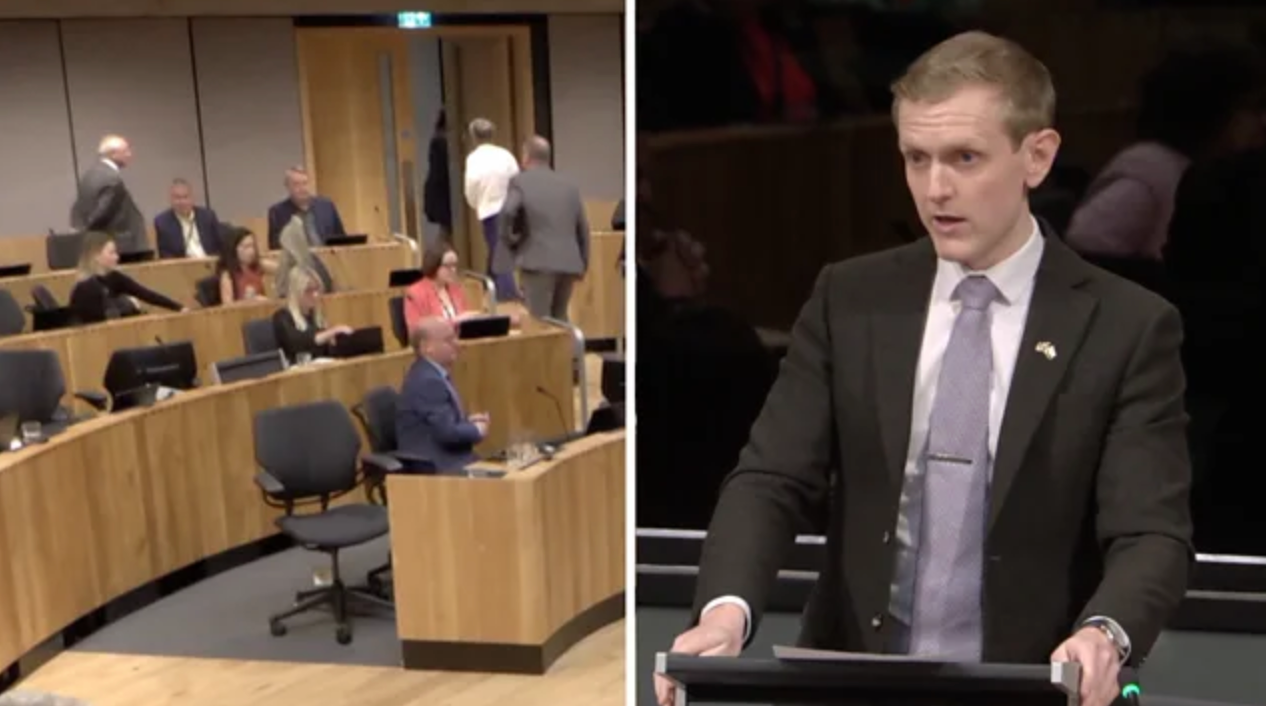
Plaid Cymru, Labour and Green members walked out of the Senedd on 17 June during a Reform-initiated debate on scrapping the Welsh Government’s £9m international budget, after Reform MS Joe Martin dismissed the programmes as ‘pointless vanity projects’ and made remarks fellow members condemned as racist. Plaid Cymru’s Zaynub Akbar left first saying ‘I don’t accept any of this and I don’t want to be a part of it’. Daisy Brett unpacks what the episode means for parliamentary standards under the new Plaid-led Welsh Government — read her Senedd Explained explainer.
Coventry City Council join the national write-out keeping overseas voters on the register
Returning officers across the country are writing out to the UK’s roughly 200,000 overseas electors, reports Coventry City Council’s Martyn Harris. Overseas voters can drop off the register between electoral events for purely administrative reasons, losing their vote in UK parliamentary elections and referendums. The aim is to keep them registered, with a postal or proxy vote in place before the next poll — connect with Martyn on LinkedIn.
Power & Structure
Where power sits and who gets a seat at the table

Liberty warn the Met against expanding surveillance tech before oversight in place
Liberty has responded to the Metropolitan Police Commissioner’s announcement of a major expansion of live facial recognition, drones and AI-powered surveillance across London — a rollout arriving before Parliament has put any dedicated legal framework in place. Ruth Ehrlich, Liberty’s Director of External Relations, said ‘Londoners absolutely have the right to expect that there should be rules that are applied clearly and consistently’. She called for the expansion to be paused until proper oversight, accountability and transparency are in law. Read Liberty’s full response.
Netpol warn new protest powers are fuelling ‘growing state of repression’
Network for Police Monitoring (Netpol) report they are documenting a crackdown on the right to protest ‘happening almost every day, in different ways and in disparate parts of the country’. Campaigns coordinator Kevin Blowe points to recent flashpoints — such as the demonstrations outside the ‘Great Israeli Real Estate Event’ at an Edgware synagogue — as ‘snapshots’ of what he calls a growing state of repression, warning that powers under the Crime and Policing Act 2026, which let police restrict protests that deter access to places of worship, could narrow the right to demonstrate further. Read Netpol’s full report.
MHCLG strip nine councils of planning powers in housebuilding push
MHCLG has designated nine councils — Cherwell, Dacorum, Epping Forest, Hertsmere and South Tyneside among them — as underperforming on planning, meaning major housing and commercial applicants can now bypass local planning departments and apply straight to the Planning Inspectorate. Council leaders have pushed back — Epping Forest’s Cllr Chris Whitbread called it ‘an attack on local democracy and accountability’ — read William Eichler’s report in LocalGov.
mySociety win a standards complaint over an MP’s missing declaration — and share the lessons
mySociety has won a complaint to the parliamentary standards process over an interest Conservative MP Nick Timothy had failed to declare — spotted via the register-of-interests data behind its TheyWorkForYou service. Their candid write-up covers how an ordinary member of the public can bring a standards complaint, where the process proved opaque or slow, and what would make Parliament’s transparency mechanisms work better. Read what they learned about holding representatives to account.
Republic brand palace’s accounts ‘dishonest and misleading’
Republic, the campaign for an elected head of state, has criticised the royal household’s 2025–26 accounts, arguing they gloss over a near-doubling of the Sovereign Grant and obscure the true cost of the monarchy. Chief executive Graham Smith said ‘another huge hike for royal spending’ came with ‘more spin and gloss and more misdirection on taxes’. Once lost Duchy profits and other costs are counted, the group claims, the real bill to taxpayers exceeds half a billion pounds. Read Republic’s analysis in full.
INLOGOV ask why accountability ‘failed to bite’ in the 2026 Tower Hamlets elections
Writing for the University of Birmingham’s Institute of Local Government Studies, Dr Gulay Icoz examines an ‘accountability paradox’. Despite government intervention over documented governance failures, Tower Hamlets voters returned Lutfur Rahman’s Aspire administration with 73% of the seats on 32% of the vote, they say. The deeper problem, she argues, is not voter apathy but an intervention read locally as ‘external imposition’. Read the piece for an insightful look at local accountability.
CIPFA draft new financial ‘proper practices’ for England’s parish and town councils
The Smaller Authorities Proper Practices Panel met to consider draft new proper practices, prepared by Chartered Institute of Public Finance and Accountancy (CIPFA), for the accounts of England’s parish and town councils — including a new requirement to report borrowing and an end to reporting staff costs separately. The new practices are on track for publication by March 2027, in a sector where weak financial audit remains a persistent local democracy concern. Follow progress via the National Association of Local Councils.
NALC women councillors’ network confronts rising harassment and online misogyny
The National Association of Local Councils’ women councillors’ network met in late June to confront the rising harassment and intimidation facing women in public life — and its chilling effect on representation. The Local Government Association’s Ambassador for Civility in Public Life, Cllr Hannah Dalton, briefed members on the Debate Not Hate campaign, and discussion turned to gaps in support and policing and the influence of online misogyny and the ‘manosphere’. Participants set priorities including tackling violence against women and girls and strengthening allyship.
Centenary Action mark 98 years of equal votes with a sash for every woman MP
Centenary Action marked 2 July — 98 years since the Equal Franchise Act 1928 gave women equal voting rights with men — by celebrating the women who have since reached Parliament. Working with Re:Make Newport, the campaign has created a personalised sash for every woman MP, each embroidered with her unique number in the history of women elected to Parliament. The newest, Green MP Hannah Spencer, has just received hers — and with women still short of equal representation, celebrate the women MPs who have inspired you via Centenary Action.
UN expert Gina Romero warns digital surveillance is quietly dismantling civil society
Writing for Tech Policy Press, Gina Romero, UN Special Rapporteur on the rights to freedom of peaceful assembly and association, argues that surveillance is not a series of isolated privacy problems but a ‘permanent, interconnected, remote and invisible’ monitoring ecosystem that is eroding the trust collective democratic action depends on.
Organisations are diverting scarce resources to digital security, lowering their public profile to avoid criminalisation, and even deleting websites and archives to protect staff. She urges governments and companies to assess the cumulative human-rights effects of these systems — read her argument.
UCL Constitution Unit give evidence to the Oireachtas on reforming Northern Ireland’s institutions
The Constitution Unit gave oral evidence to the Oireachtas committee on Good Friday Agreement implementation on 16 June, presenting their proposals for reforming the devolved institutions to improve the quality of governance. Any change, they stressed, would need ‘a large measure of cross-community agreement to command legitimacy’ — and with Alan Whysall warning that ‘Stormont is in trouble’, the case is for substantive rather than superficial reform. Read more via UCL.
New Economy Brief welcome ‘Pride in Place’ but warn the money is ‘a drop in the ocean’
A New Economy Brief digest weighs up the government’s £5.8bn Pride in Place programme, which seats residents on Neighbourhood Boards to control local spending across hundreds of deprived areas — a deliberate shift from top-down, competitive funding towards needs-based allocation. Drawing on analysis from JRF, Power to Change, NEF and CLES, it welcomes the community-power principle but warns the money is ‘a drop in the ocean’ against the scale of need — and urges genuine community-led delivery, community wealth-building and participatory budgeting. Read the digest via New Economy Brief.
Think Labour call on government to ‘reassert the primacy of democracy over public services’
Think Labour, a Labour-aligned policy organisation, argues in a new paper, Democratic public services, that government should ‘reassert the primacy of democracy over public services’ — a principle it says ‘has been rolled back in favour of market accountability and regulation’ over recent decades. It makes the case for democratic control and public accountability, rather than market mechanisms, as the organising principle for how public services answer to citizens. Read the paper on Think Labour’s site.
Capacity & Engagement
Building the muscles of a healthy democratic culture
Media Reform Coalition bring people’s assembly to this year’s Media Democracy Festival
Campaigners, journalists and academics gathered last month at the University of Westminster for this year’s Media Democracy Festival, built around the theme ‘The Future of Public Media’. Alongside keynotes, panels and workshops, the day featured a first-of-its-kind people’s assembly, confronting a moment in which ‘disinformation spreads faster than truth, media ownership continues to concentrate, and public interest journalism faces deep structural challenges’. Keep an eye out for session recordings and write-ups from the Media Reform Coalition.
Public Interest News Foundation celebrate a record-breaking Indie News Week
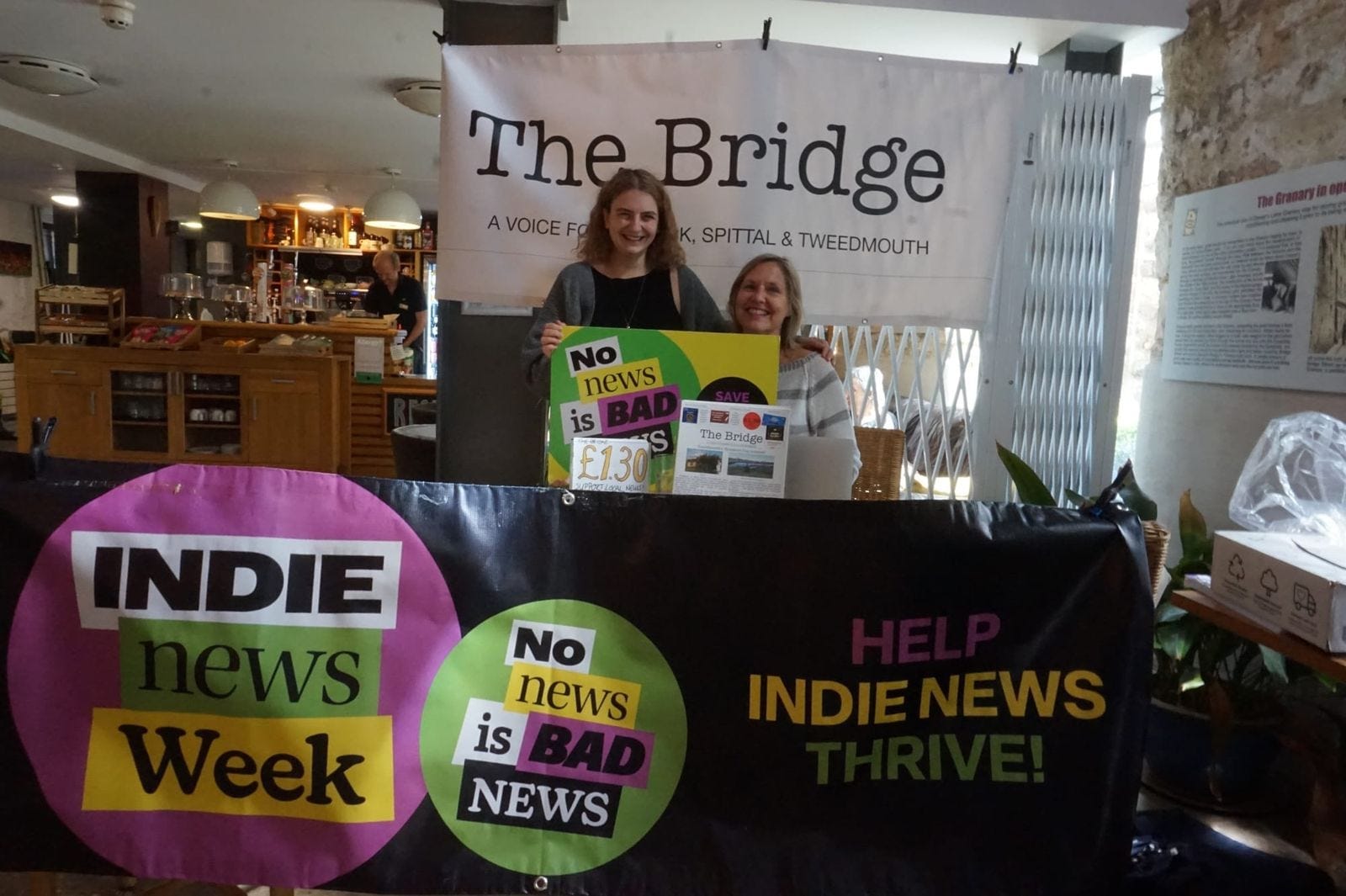
The Public Interest News Foundation (PINF) reports that its third annual Indie News Week was the biggest yet, with more than 30 independent outlets across England and Wales hosting events in June on why democracy needs indie news — from a Deptford panel and a Leicester freedom-of-information workshop to the launch of a hyperlocal Welsh site in Treorchy. Byline Times editor Hardeep Matharu urged audiences to ‘make hope matter again’ for local news. Sign up via PINF to follow Indie News Week 2027.
But that’s not all from PINF: Joe Mitchell sat down to record a podcast with ADSO
The latest Democracy Conversations from the Association of Democratic Services Officers (ADSO) features Joe Mitchell — Deputy Director of the Public Interest News Foundation on why local news is an essential part of local democracy. The conversation takes in how local journalism shapes the relationship between councils and citizens, how new independent titles are doing things differently, and why we can’t simply rely on AI to translate council decision-making. Listen, watch or read the bite-size highlights now.
Areeq Chowdhury launches ‘By Any Machine Necessary’ new blog on democratic control of AI
Technology policy adviser Areeq Chowdhury has launched By Any Machine Necessary, a fortnightly Substack on how the powerful are using technology to reshape society — and how policymakers might ‘regain control’. His opening essay sketches a public-interest agenda for AI, publicly-owned, open-source AI infrastructure, universal digital access, worker representation and a National Data Service — rather than leaving the technology’s direction to a handful of corporations. Subscribe for free to follow the argument.
Katy Rubin makes the case for ‘inclusive by design’ democracy that takes emotion seriously
Writing for Philea, creative civic strategist Katy Rubin of The People Act and academic Alberto Ford argue that mainstream deliberation privileges detached, rational speech — quietly excluding those who cannot emotionally separate themselves from the policies that shape their lives. They contend that ‘unheard emotions’ such as indignation, shame and loneliness are signals of systemic failure, and that embodied, arts-based methods like Legislative Theatre can fold reason, emotion and lived experience into more inclusive problem-solving. Read their call for funders to back the creative infrastructure it requires.
Connected by Data wrap up their data and AI community of practice — and gather the lessons
Connected by Data’s monthly community of practice for people engaging the public around data and AI has wrapped up after a year and seventeen events, part of its Mohn Westlake Foundation-funded project ‘Giving communities a powerful say in public sector data and AI’ grant. Gavin Freeguard has gathered the lot in two fresh blogs — read the round-up of speakers and resources, then see what comes next for the community.
People Powered and the Democracy Narratives Alliance publish an 11-point agenda to rebuild faith in democracy
The Democracy Narratives Alliance — a coalition of 40+ organisations convened with People Powered — argues that rebuilding public engagement takes coordinated storytelling, not just better policy, with confidence in democracy falling and autocratic appeals rising. Its new 11-point action agenda spans narrative research across contexts, an AI tool to synthesise guidance for activists, influencer partnerships and a dedicated fund for democracy-narrative work. Read the agenda and join the Alliance via People Powered.
Humanity Project release ‘Love + Power’, a short film on democracy from the ground up
Humanity Project — the team building ‘assembly culture’ through neighbourhood assemblies and community organising across the UK — has released Love + Power, a three-minute film distilling three years of listening and organising across England and Wales. Directed by filmmaker Nathan Davies, it takes its cue from Martin Luther King Jr.’s line that ‘power without love is reckless and abusive; love without power is sentimental and anemic’ — a glimpse of the community power that can emerge when people come together to shape what happens where they live. Watch and share the film.
And now for something completely different …
A glance beyond the UK sector

MONARCH argue election technology needs independent security assurance, not just testing
MONARCH — a firm founded by former intelligence chiefs, senior government figures and security scholars — argues that election technology is widely tested but rarely independently verified as secure, compliant and ‘legally defensible’ by assessors with no stake in the result. It says its recent work included a full independent audit — source-code review, penetration testing and end-to-end auditability — of the electronic voting, counting and result-matching systems of a major Middle Eastern democracy of 47 million citizens. Read their case — and ponder where independent assurance fits in the future of democratic infrastructure.
National Endowment for Democracy name their 2026 Democracy Award recipients
The US-based National Endowment for Democracy has named the recipients of its 2026 Democracy Award — themed on First Amendment freedoms to mark America’s 250th anniversary — honouring activists, artists and journalists working under repression. Honourees include anti-war clergy advocate Friede Allen (Russia), imprisoned Cuban dissident artists Félix Navarro, Luis Manuel Otero Alcántara and Maykel Castillo Pérez, the Syrian Center for Media and Freedom of Expression, Ethiopia’s Addis Standard, and organisers of Burma’s Spring Revolution. The award will be presented in September at Mount Vernon, Virginia.
Larpocracy ask whether live-action role-play can build democratic skills
Larpocracy, an EU Horizon Europe-funded research project running to December 2027, is investigating whether live-action role-play (LARP) — yes, dressing up and playing a character — can be a serious method for building democratic skills and reviving civic participation where traditional engagement and social media fall short. It runs ‘Designing Democracy’ workshops and seminars (including at the Knutepunkt gathering) and has begun publishing research on lowering barriers to cultural participation.
Civic Data Tech set out to protect the data infrastructure underpinning US democracy
Civic Data Tech is a new project dedicated to ‘enhancing access to civic information’ — sustaining the often invisible data infrastructure that underpins democratic and civic processes in the United States and across the world, from public records to the datasets that keep citizens informed. It joins a wider movement to keep civic data open, trusted and in the public interest, rather than locked in proprietary hands.
That’s all for now,
James and the Democracy Network team