UK Democracy Bulletin, March 2025
Issue #69 — Wednesday 19th March 2025
Monthly news, jobs, grants and gossip from across the democracy sector, brought to you by James Moulding and Max Roche of the UK Democracy Network. Read by 400+ democracy organisations. We read everyone’s newsletters & research so you don’t have to. If you want us to cover yours, let us know: hello@democracynetwork.org.uk
How you can get involved right now! Do these things 👇
- Join the Democracy Network as a member
- Introduce yourself on the Democracy Network WhatsApp Community
- Sign up to upcoming events
- See the latest democracy jobs & add your own
- Check available democracy funding
- Explore the Democracy Map
- Post to the UK Democracy Forum Mailing List
Highlights
- Section 106 UK Government to enact crucial equality legislation
- UK Government draws up plans to limit overseas political donations
- NetPol major report reveals severe protest crackdown
- UK Youth Parliament meets for 2025 annual session
- Democracy Classroom #ElectionCountdown 2025 kicks off
- Constitution Unit publish new report on constitutional reform options
- Rathlin Island begins new minipublic Citizens Panel
#DemocracyJobs
Featured Job Listings across the Democracy Sector. View the full database of upcoming job listings here — have we missed any? Add them via this form.
Rolling deadlines
- Rolling deadline: Researcher and Analyst for Disinformation Analysis at Debunk (€1200 — €1800)
- Rolling deadline: Head of Charity at Changing Ideas (£75k pro rata)
- Rolling deadline: Advisory Board at The Traveller Movement (voluntary)
- Multiple roles: Association of Democratic Services Officers
- Multiple roles: People’s Economy
Featured upcoming roles
- Apply by 19th March: Research and Operations Coordinator at Netpol (£28,933 pro rata)
- Apply by 19th March: Head of Fundraising at New Economy Organisers Network (£50,709)
- Apply by 24th March: Fundraising Manager at Make Votes Matter (£35,000)
- Apply by 27th March: Communications Manager at Power to Change (£53,000)
- Apply by 28th March: Chief Investigator at Declassified (£50,000)
- Apply by 31st March: Senior Research Fellow: Democracy and Politics at IPPR (£48,436 — £59,793)
- Apply by 1st April: PhD Studentship: Trust, Digital Contact, and Democratic Representation at Sheffield University (Fully funded — no salary stated)
- Apply by 13th April: Senior Network Organiser at New Economy Organisers Network (£45,127)
Funding Democracy
UK Government cuts funding to Tell Mama Islamophobia charity
Founded in 2012, Tell Mama is the UK’s primary reporting service for Islamophobia and until now, has been fully funded by the UK Government to run the service, which supports victims of Islamophobia, and received almost 11,000 reports in 2023–2024. The government is cutting all funding to the service, leaving it facing closure just weeks after it revealed a record number of anti-Muslim hate incidents in Britain.
Fiyaz Mughal, the founder of Tell Mama, said its resources were being cut while ‘the far right and populists across Europe are growing significantly’. He said: ‘There are going to be more individuals targeted, we know that in the current environment, and where are they going to go? This is an injustice at a time where I have never seen anti-Muslim rhetoric become so mainstream.’
City Bridge Foundation launches new Standing With Londoners fund
The new fund focuses on changing the systems that keep people marginalised, they say, while also addressing issues communities face right now. City Bridge Foundation aims to launch the first of their new funding programmes in autumn 2025.
What’s happening to European democracy and what can funders do about it? Asks Philanthropy Europe Association
Philanthropy Europe Association have produced this in-depth explainer into democratic backsliding across Europe, and how philanthropic organisations can develop appropriate strategies that address the multidimensional challenges democratic backsliding presents. Read the explainer here.
National Endowment for Democracy suspends activity following US funding freeze
For the first time in their four decade history, the National Endowment for Democracy is having to suspend support for over 2,000 partners worldwide due to their inability to access congressionally approved funding, with significant impacts for UK and European based organisations. The impact of this is being felt particularly acutely for frontline organisations who are being forced to lay off staff and strip back important operations on the ground.
Democracy Sector
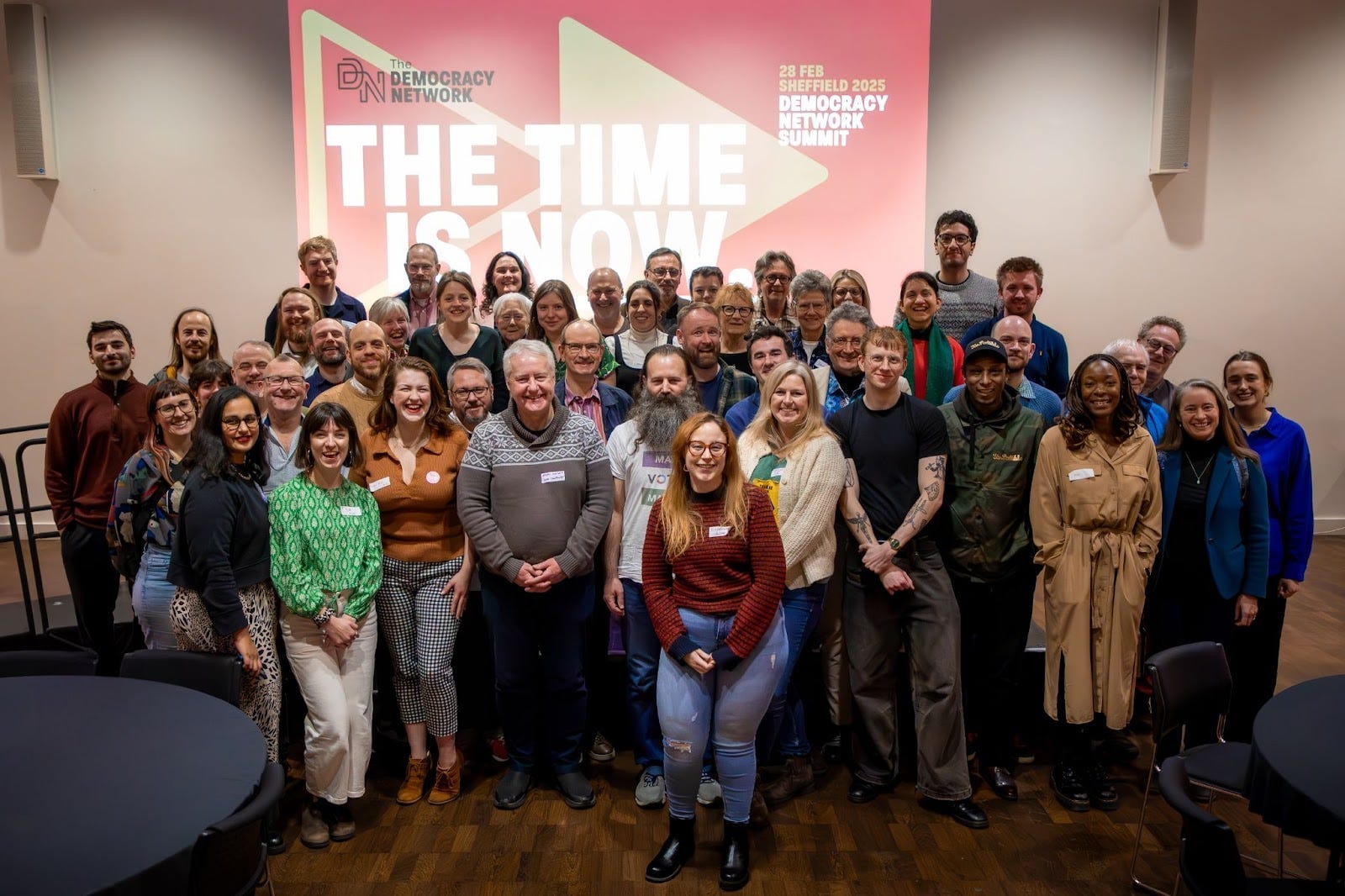
Democracy Network Summit brings together democracy sector in Sheffield
Last month the Democracy Network Summit 2025 brought together more than 120 people from across the Democracy Network for a day of networking, workshops and talks. If you missed the event, you can view the photos here! Thanks so much to everyone who came.
Democracy Network — Evolving Capacity, Same Commitment
The Democracy Network is evolving! As our team structure has changed, so too will some of the ways we work — at least for now. While our capacity to respond to individual requests may be more limited for the time being, we remain committed to fostering high-quality discussions and connections. Thank you for being part of the growing Democracy Network community — we look forward to continuing to support and learn with you. As always, if you have any questions — get in touch.
Democracy Coworking & Games London — March 27–28th
Join us for Democracy Coworking in London on March 28th — register now here. But that’s not all — next week Patti, Jess and John and gang of the Democracy Board Games Club are back, join them for democracy-themed games & pizza next Thursday evening — sign up here!
Are you attending/organising around the 2025 party conferences?
It’s that time of the year again — so if you’re hosting an event, running a panel or drinks reception, or perhaps you’re just attending, add your plans to the Democracy Network party conferences sheet and see who else is working on what and how you could possibly work together — View the spreadsheet here.
Imagine Belfast, 24–30th March
Imagine Belfast, the annual festival of politics and ideas, is back for a week of discussions, comedy, film, lectures and more — don’t miss out.
Sheffield Festival of Debate is back!
Joe Kriss and the team at the Festival of Debate are back, delivering their huge array of events, talks and community events across Sheffield in April & May — don’t miss it! Get your tickets now!
Open Rights Group welcome Henry VIII powers joint letter sign ons
Jeanette Smith, Head of Fundraising and Projects at the Open Rights Group (ORG), is publishing a new joint letter this week focused on new Henry VIII powers in the Data Use and Access Bill and their threat to election integrity, namely the impending capacity of a future government to change the conditions of how data is processed by political parties during an election period with minimal parliamentary oversight — Email ORG and add your organisation to the joint letter. Open Rights Group also published a damning report earlier this year into UK political parties’ misuse of data — Read the report now: Moral Hazard: Voter Data Privacy and Politics in Election Canvassing Apps.
My Vote My Voice 2025 campaign launched
Earlier this month, My Vote My Voice (MVMV), met with partners and campaigners to share their plans to make the 2025 Local Elections accessible to everyone. MVMV spokespeople shared their vision and experiences of voting, and the campaign shared their ambitious plan for the year and how community groups can get involved to make voting more accessible in 2025 — Watch the webinar of the launch now.
Free taster workshop on campaign strategy
Titus Alexander is running a free workshop on campaign strategy, using stories and asking questions to create change, in London 1–3.30 pm Tuesday 25 March 2025. For details and book go to: https://bit.ly/419JUbB. This is a taster for the 12–18 month course to support you carrying out a campaign or project at work, funded through the Apprenticeship Levy, in partnership with the Democracy Network. Come & find out more, & learn something useful.
First ever London Democracy Week successful, say Shout Out UK
Shout Out UK worked to deliver the Greater London Authority’s first ever London Democracy Week, interacting with over 860 people and helping more than 280 people to register to vote in schools and student centres across the capital, through stalls and visiting assemblies and an online presence.
State of Hate: Hope not Hate to discuss extent of far-right activity in the UK
Hope not Hate is hosting a webinar on the 19th of March to discuss their latest findings on the state of far-right activity in the UK. The webinar will explore how public attitudes have shifted as a result of the August riots, how anti-migrant activity has changed in 2024 and whether the new Labour government has impacted changing political rhetoric, and much more — Sign up now.
Join Ella Baker School of Organising for a special conference on narratives of division
On June 7th, the Ella Baker School of Organising plans to bring together those who are already doing something, and those that plan to, to ‘innoculate their communities’ from increasing narratives of division within society. The conference will facilitate and encourage participants to think deeper about the challenges, rather than provide a ‘blueprint’ solution, they say — Express your interest in the event here.
Assemble following in the footsteps of the Chartists, March 29th
Assemble are organising a special tour of London historical sites, starting at Kennington Park — the site of the 1848 Chartist demonstration, before taking in Leveller and Suffragette sites, and modern anti-fascist sites, such as the 1936 Battle of Cable Street, where trade unionists, British Jews and socialist groups famously stopped Mosley’s British Union of Fascists from marching through predominantly Jewish neighbourhoods of East London. Find out more.
Newspeak House are looking for new applicants
Newspeak House — The London College of Political Technology is currently on the lookout for new applicants for next year’s 2025/2026 intake starting this September. Students will spend a year immersed in communities of practice and undertake the one-year course Introduction to Political Technology course, alongside a range of other activities. Find out more here, residential and non-residential places available. In the past year Newspeak House developed the Election Tech Handbook and the the MP Office Manual and is a thriving hub for political technology hosting hundreds of events every year.
Connected by Data unconference on participatory public technologies, 20th March
Don’t miss Connected by Data’s upcoming unconference Engaging people on data and AI: An unconference on giving people and communities a powerful say on public sector technologies in London this Thursday. If this peaks your interest, get involved in their online community of practice which meets monthly, here.
Generation Rent uncover key data on demographic drivers of voter registration
Following on from their 2023 analysis of voter registration and census data, Generation Rent set up a data hub with numbers they used at a local level, including a wider set of demographic indicators than used in their earlier analysis — Generation Rent have now updated their hub with the latest data and estimates of eligible voters for each constituency in England & Wales. They welcome any feedback and questions on the work. View the updated voter registration data hub.
Care Full launching, March 26th
Ruth Hannan and Hannah Webster are launching Care Full, a new initiative promoting the importance of care in creating a sustainable and just economy. On Wednesday 26th March they will be hosting an event in London alongside Autonomy to launch Care Full into the world. Drop them an email if you are keen to attend the launch event.
Elect Her making strides on their new Be A Councillor partnership
Elect Her are working in partnership with a range of organisations, from the Local Government Association (LGA), 50:50 Parliament, the Disability Policy Centre, Operation Black Vote, The Politics Project and the Migrant Democracy Project — with the aim of reaching those who are underrepresented in local government and supporting them to Be A Councillor! Get in touch with Annabel Mullin, Director of Communications at Elect Her, to find out more.
Make Votes Matter hiring a new fundraising manager
Could you help advance the work of fairer votes in the UK? Apply for this exciting opportunity with Make Votes Matter as their fundraising manager, sourcing the funding streams to progress their work — deadline 24th March, apply now.
Unhack Democracy launch new REWIRE Substack
Unhack Democracy run a hope-based mindset shift incubator called REWIRE with 15 social change makers from across Poland, Hungary and Bulgaria, with the goal of developing a cohort of leaders more willing to take risks and develop creative solutions to the issues affecting their societies. As part of this Unhack produce a regular Substack, which you can read here focused on building stronger democracies — they also run regular online events reflecting on the strength of civil society in Eastern Europe, this month’s event featured the former Deputy PM of Ukraine, which you can watch here.
Democracy Club relaunches archive of over 20,000 election leaflets
With 36% of all spending by political parties at the 2019 general election going on leaflets, they continue to be a vital campaign material. Thankfully, Democracy Club has done a brilliant job collecting and archiving political leaflets and you can now search the database by region and year of upload.
Phew! TICTeC going ahead as planned, mySociety say
Following the US Government USAID cut and the ensuing impacts across the globe, mySociety’s TICTeC civic tech conference found their funding having dried up with the collapse of funding for the US-based National Endowment for Democracy. However, all is now well with funding restored and the conference is back on!
Campaigners welcome a shift in the tone under Labour government, says survey
The Sheila McKechnie Foundation has launched the results of their ninth Campaigner Survey. The survey asked campaigners about the challenges they face and the evolving landscape in which they work. The general sense amongst campaigners is that the new government has opened up further possibilities for campaigning due to a greater openness and engagement with campaigning organisations.
Devolved & Local Democracy
How to shift ‘Council Culture’ so local councils work with citizens
A new report from the New Citizenship Project — Council Culture — looks at the cultural changes that need to happen at a local level to bring citizens into the decision making process. By ‘changing the narrative, embedding new rituals, and building totems’, the report set out a pathway to a stronger local democracy.
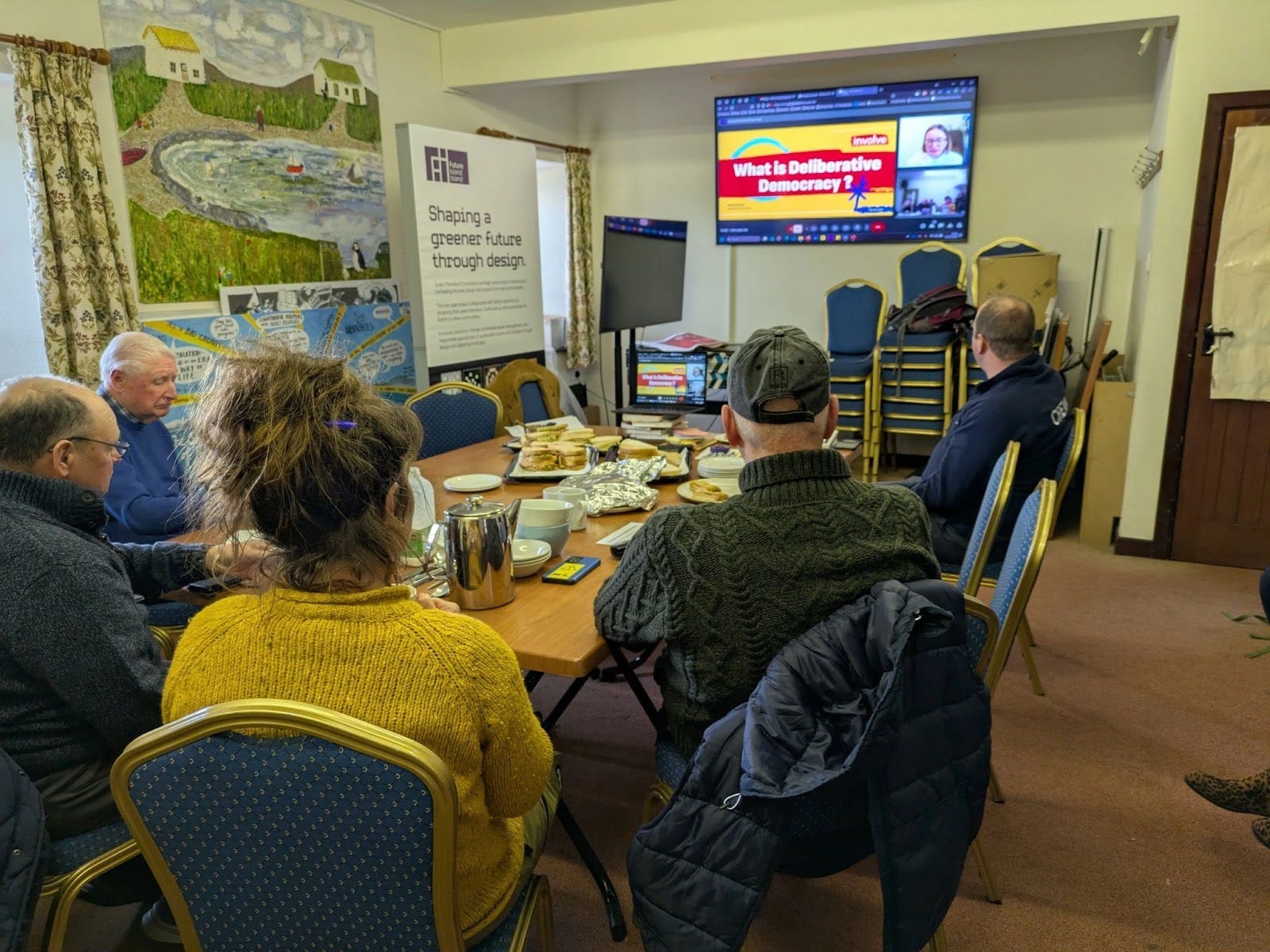
Rathlin Island begins new minipublic
The Rathlin Citizens Panel is an attempt to answer key questions on the future of Rathlin Island and follows more than ten years of experimentation and work on participatory processes with the islanders, including the development of the only island policy in the UK. Join the upcoming workshop on the 27th March as part of Imagine Belfast Festival to find out more.
Isle of Wight campaign to encourage engagement in elections progressing
It’s all islands this week, with Ian Boyd of Common Space reporting on their work at Parish Futures, a new campaign to push for greater engagement with the local council and local elections on the Isle of Wight.
Civic Education & Young People

Welcome To Your Vote Week, 10–16 March
The Electoral Commission’s Welcome To Your Vote Week is an annual event asking schools, colleges, youth groups and universities to celebrate democracy by delivering democratic education with their students and young people. Find out more and sign up to receive the resources here (it’s not too late!).
Democracy Classroom #ElectionCountdown 2025 kicks off
Each year Democracy Classroom provides a huge array of resources and information sharing activities prior to the year’s local elections for school students and educators, including more than eight webinars covering various aspects of the election cycle — visit #ElectionCountdown 2025 now for more information.
Young people want to learn more about politics and democracy, new Electoral Commission report
Young people and children want to learn more about elections and politics in school, according to new research by the Electoral Commission. The research, carried out with people aged 11 to 25, found that nearly three quarters of those surveyed (72%) wanted to be taught more about the subject. “Young people are telling us they want to learn more about democracy and voting — we hear it loud and clear”, said Vijay Rangarajan, Chief Executive at the Electoral Commission — Read the full report.
Naked Politics offer free nationwide in-person school sessions on making change
Naked Politics is offering free in-person interactive sessions in schools to encourage young people to think about how they can create change in their communities beyond elections. Naked Politics is especially interested in catering to young people of colour, but welcomes all enquiries. If you are interested or have any questions about the sessions, contact Bella Frimpong via bella.frimpong@nakedpolitics.co.uk
National Youth Parliament meets for annual session 2025
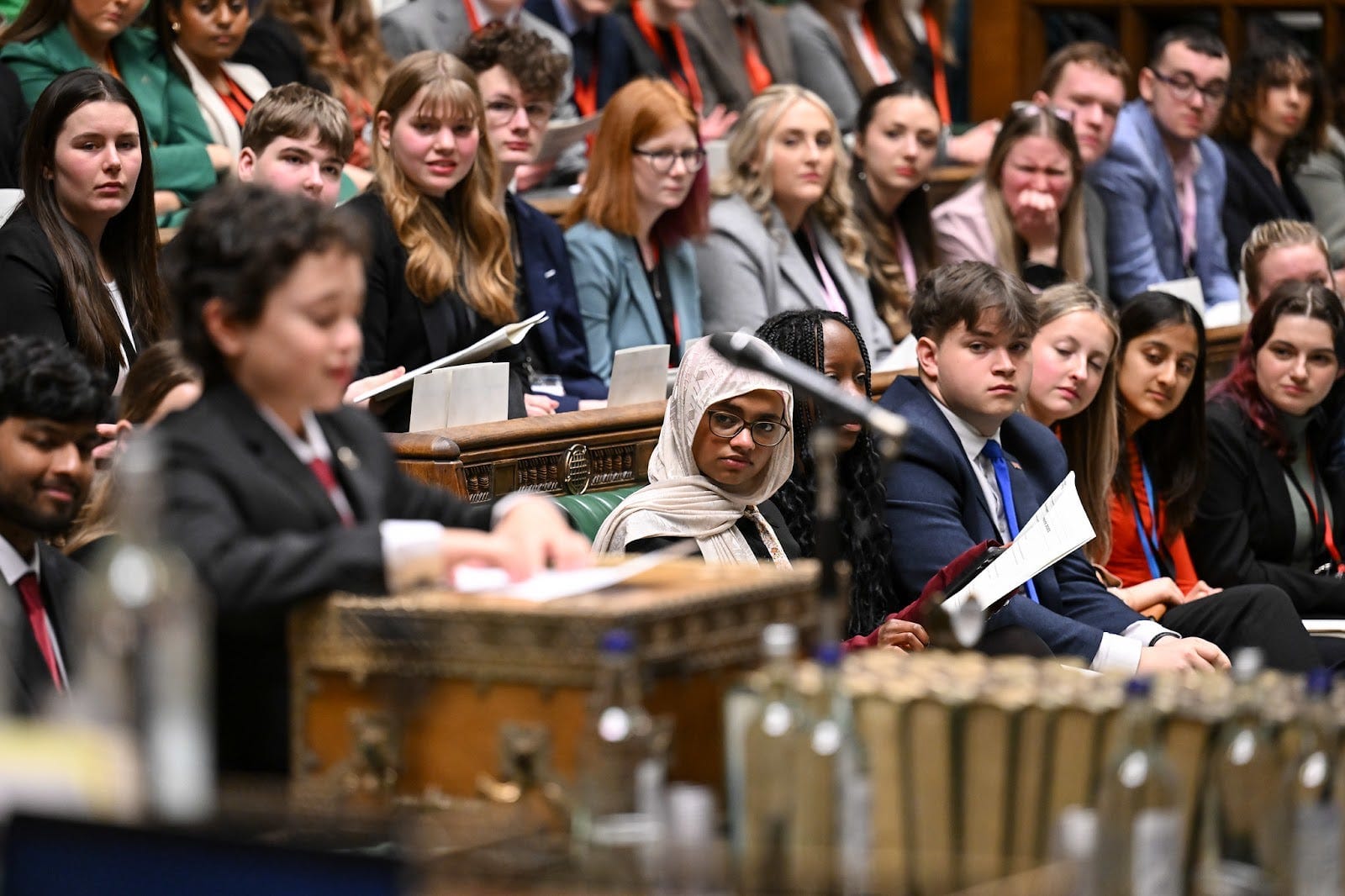
On Friday 28 February, more than 300 elected Members of Youth Parliament (MYPs) aged 11–18 met to represent the views of their peers and held debates on a range of topics. Young people from across the UK, British Overseas Territories and Crown Dependencies gathered on the green benches of the House of Commons Chamber on Friday 28 February for the annual sitting of UK Youth Parliament. They met to discuss motions on whether 16- and 17-year-olds should be allowed to vote in all elections, whether the the National Minimum Wage for every worker under 22 be raised, whether all public transport should be free for young people, and much more. The National Youth Parliament was organised by the National Youth Agency.
The Politics Project is after for volunteers for a Youth Steering Group
The Youth Steering Group is a new initiative designed to give young people a voice in shaping how The Politics Project engages with politics and democracy. They are looking for 14–20 year-olds from across the UK to join them and help shape the organisation’s future projects and programmes. Get in touch if you know someone that might be interested.
Gen Z don’t actually want a dictatorship — new research debunks recent polling
A recent widely publicised poll — covered in our previous bulletin — suggested that over half of Gen Z think Britain would be in a better place if ruled by a dictator. But recent research by King’s Policy Institute debunks this claim following extensive research with 2,032 adults between 13 and 27 years old. They tested different versions of the question on Britain as a dictatorship and found that the overall number is more likely to be about 6%.
Majority of teachers think curriculum provides insufficient political education, poll shows
New polling by Teacher Tap finds that 84% of state school teachers don’t believe the current curriculum offers sufficient political education to prepare students for voting in elections. With Labour promising to lower the voting age to 16, the vast majority of teachers across the UK, according to Teacher Tap, feel changes must be made to ensure students are ready for this change.
Democratic Reform & Innovation
Government to publish their approach to electoral reform before the summer recess
Democracy Minister Rushanara Ali MP has announced that the government will publish its approach to elections and electoral reform before the summer recess. The document will include how they intend to deliver on manifesto commitments and the findings from the review into electoral registration and conduct.
New law to force political parties to publish diversity data on candidates
The Government has now confirmed it will begin the process of enacting Section 106 of the Equality Act — a crucial measure that will require political parties to publish diversity data about their candidates. The legislation was written back in 2010 but it has taken 15 years for it to be enacted — something which campaign groups have consistently pointed to as limiting our ability to understand political representation in the UK.
Upcoming Electoral Integrity Project workshop on electoral reform
The Electoral Integrity Project is running a workshop on electoral reform, focused on examining efforts to improve the quality of elections around the world. Find out more information and join the three day online event, running from March 19–21st.
4.4 million residents have no right to vote, says new Migrant Democracy Project report
A new research report, What If Everyone Could Vote?, commissioned by the Migrant Democracy Project and funded by the UK Democracy Fund, finds that 4.4 million residents have no right to vote in general elections, and 1.2 million residents in England and Northern Ireland have no right to vote at all. The report suggests that residence-based voting rights could be implemented as a practical and inexpensive policy solution to combating these disparities in the UK. Read the report now.
Unlock Democracy’s Resilient Democracy conference launches 5 new campaigning strands
Unlock Democracy’s Resilient Democracy brought together 28 UK based democracy organisations, who then agreed to work across 5 new campaign strands. These were: promoting Automatic Voter Registration and Votes at 16, improving representation in Parliament, taking foreign money out of politics, tackling deception and improving standards in politics, and finally, establishing a pro democracy institution or campaign. Contact Tom Brake for more details.
Constitution Unit publishes major new report on options for constitutional reform
The new UCL Constitution Unit report, The Constitutional Landscape: Options for Reform, outlines 31 possible reforms across 6 different areas, from ministerial standards to the future of the Union. Read the report now.
New guide on introducing Automatic Voter Registration
Professors Toby S. James and Paul Bernal have produced extensive guidance on how an automatic, or direct, form of voter registration can be implemented across the UK. Read the new report here. The report was funded by the UK Democracy Fund.
The Association of Electoral Administrators publish blueprint for electoral reform
The Association of Electoral Administrators have published a new set of recommendations, urging the government to implement new changes to update and modernise the British electoral system. Recommendations include earlier deadlines for postal voting, reviewing accepted voter ID formats and changes to polling hours and places — in addition to requests for an independent Royal or Parliamentary Commission review of core election delivery processes and much more, view the report here.
The Political Technologist held workshop on Democratic AI
The Political Technologist is a new publication exploring the intersection of technology and civic processes. In this, their second workshop on Democratic AI, they explored the use of AI to enhance group deliberation. Find out more information.
‘Citizens in Power’ Network is launched to improve citizen-led decision making
A new network has been launched to rethink and redesign the way that decisions are made in the cultural and creative sectors. The Citizens in Power Network, made up of 65 members, associates and experts, will run from 2025–27, bringing together key stakeholders to explore how citizen-led decision-making that reflects the diversity of communities can lead to better outcomes. The network will test different approaches to citizen participation centring on the principles of ‘authority giving’, ‘civic lottery’ and ‘deliberation’ — and will advocate for the take up of new models of democratic decision making.
Report launch: Improving Welsh Democracy — Lessons from around the world
On the 4th of March, the Institute for Welsh Affairs launched their new report exploring the potential of democratic innovation to improve Welsh democracy. These innovations are taken from different contexts around the globe where governments have improved their national democracy through interventions boosting participation and citizen deliberation in decision-making.
Demos open letter calls for citizen-led approach to digital rights and tech policy
Following the AI summit in Paris, Demos issued an open letter calling for the government to develop a citizen-led ‘Declaration of Digital Rights & Principles’ for the UK. The declaration would not be legally binding, but would allow the government to understand and reflect the values of UK citizens in its decisions on tech policy, guiding future policymaking.
Commission on Political Power launches inquiry into cabinet reform
The Commission on Political Power has launched an inquiry into what can be done to reform cabinet power as the centre of Government. The first evidence session was held in January with Lord Richard Wilson and Lord Robin Butler, and more sessions on this question to be held in the coming months.
Democratising the Media
Media Democracy Festival 2025, coming soon
This May, the Media Reform Coalition are hosting their next gathering, bringing together activists, independent media outlets, journalists, researchers and policymakers to debate how they can transform the media into a more independent, accountable and democratic system that serves the public interest. The event will feature contributions from broadcast journalist Sangita Myska, journalist Peter Oborne, Byline Times editor Hardeep Matharu, the Bristol Cable, We Are The Economy, Impress and many more.
Society of Editors to hold ‘Media Freedom Conference’ in March
On Tuesday 25 March 2025, The Society of Editors will host a conference on the theme ‘The Future of News’. Key discussions will include; the sustainability of the local and regional media, progress on restoring police and media relations, and relationships with tech platforms and AI companies. Leading editors and news executives from all sectors of the UK news industry will be there for this important discussion.
Want to stay more up to date with Independent News? New Bluesky starter pack is here to help
The Bristol Cable has put together a starter pack on BlueSky of independent and public interest news providers in the UK and Ireland. If you’re new to BlueSky, this is a great way to get started and follow some of the best independent news outlets around the UK!
Indie News Week is back this year from 9th — 15th June 2025
Under the banner ‘No News is Bad News’, Indie News Week will be returning this year to champion all things independent news. Set up by the Public Interest News Foundation, last year, the Independent News Fund ran alongside the festival, raising £128,000 for the sector. This year will hope to build on the enormous success of last years’ efforts, so reach out if you want to be involved.
Public Interest News Foundation Local News Commission launching Tues 25th March
Keep your eyes peeled for Public Interest News Foundation’s (PINF) latest report launch of the Local News Commission, which will be held in Parliament on 25th March.
National and local media launch ‘Make it Fair’ campaign to combat AI content theft
On 25 February, the last day of the government’s consultation on AI copyright issues, regional and national daily newspapers ran the same cover wrap and homepage takeover to raise awareness of the Make It Fair campaign. The campaign aims to boost understanding of the threat posed by AI platforms which ‘scrape’ creative content from the internet without permission or acknowledgement.

FediForum unconference highlights the open social web
With the decline of X, formerly known as Twitter, and a huge outpouring of Twitter users onto federated open platforms, such as Bluesky and Mastodon, the FediForum unconference takes aim at exploring next-generation social media breaking out of the closed silos and connecting the world into a global, open social web. Find out more about FediForum here.
US AID crisis threatens global nonprofit independent media
The sudden US Government cut-off of more than $268 million worth of agreed US AID grants for nonprofit independent media outlets worldwide is having a severe impact, throwing much of the global nonprofit watchdog sector into crisis, and potentially leaving numerous reporters, contractors, and accountability projects without pay in the weeks and months ahead.
Integrity & Transparency
Annual State of Protest report published by Network for Police Monitoring & Article 11 Trust
Published by Article 11 Trust and Network for Police Monitoring, the new Annual State of Protest report, THIS IS REPRESSION, reveals severe protest crackdown in England & Wales. The report states that aggressive police use of new anti-protest laws, coupled with a growing portrayal of protesters as alleged threats to democracy rather than a vital part of public participation, has now grown so routine and so severe that it now amounts to state repression. Register for the report launch on Wednesday 19th March.
Journalists targeted by secretive police unit, report Democracy for Sale
A secretive policing unit, the ‘Central Referral Unit’ (CRU), has been advising police forces across the UK to block requests for information, including those from investigative journalists at Democracy for Sale. Between January and March 2024, the CRU reviewed over 1,700 Freedom of Information (FOI) requests from journalists, researchers, and other requesters and recommended forces reject certain requests and logged requesters’ organisations in a secret database in a major blow to the integrity of freedom of information. MPs and campaigners have branded the CRU as an ‘authoritarian censor’ — see here for more information.
Guardian investigation reveals commercial interests in the House of Lords
A months-long investigation by the Guardian reveals that a number of peers are benefiting from commercial interests, raising questions over the lobbying rules governing the second chamber. The investigation found that: One in 10 Lords get paid to give political advice, multiple peers are being paid by foreign governments and repressive regimes, a Labour peer offered access to ministers and more than £1 in every £14 donated to political parties since 2001 came from those who have sat as peers in the last Parliament.
Ministers draw up plans to limit overseas donations to political parties
The government is looking to update election laws by limiting party donations from overseas actors. The proposed changes would require foreign companies to generate sufficient revenue or profit within the UK, potentially capping donations based on these financial metrics. For more on this topic, The Constitution Unit will be hosting an event on the 24th of March looking at whether the UK’s regulations around party financing are fit for purpose.
Beyond Transparency, new report from mySociety
Fifty volunteers have been helping mySociety comb through the Register of Members’ Financial Interests for all 650 MPs to understand how the rules around financial transparency work in practice. A new report based on the research — Beyond Transparency Four steps to control money in politics — offers four recommendations to better control money in politics. These are; better data collection, stronger checks on information, tighter rules and systematic reform to decrease the role of money in politics.
Research for Action to publish new guide on council bankruptcies
Gloria Dawson and the team at Research for Action are working on a 3-year project on councils in financial crisis, exploring the effects of both bankruptcy and government interventions on democracy and participation. They are planning to publish a new guide to council bankruptcies and government interventions for lay people/campaigners — See here for their incredible work and reports on local government auditing, citizen auditors and accountability failures in local government.
New Crime and Policing Bill introduced to Parliament
A new Crime and Policing Bill was introduced to the House of Commons at the end of February. Netpol has criticised the bill, saying it recycles several anti-protest policies introduced by the Conservatives, including banning smoke flares and making it illegal for protestors to cover their faces at a protest.
Westminster culture of shredding WhatsApp messages is bad for democracy, says New Statesman
The Covid Inquiry demonstrated to politicians that their private Whatsapp messages could be brought into the public domain through inquiries and FOI requests. Although good for transparency, this has now led to a culture whereby almost all of Westminster uses ‘disappearing messages’ on Whatsapp, reports Will Dunn at the New Statesman. This, he says, is ‘clearly bad for democracy’ as it means communications between politicians and their dealings with journalists are essentially being ‘shredded’.
Compassion in Politics campaign to outlaw deception in politics makes progress
The Welsh Parliament’s Standards Committee has taken up a proposal set out by Compassion in Politics which recommends that candidates and campaign managers who deliberately lie to the public should be guilty of a crime. Having run the campaign for six years, the team is celebrating important progress is being made — and they now have their sights set on Westminster.
Compass report explores spread of global populism and how to navigate it
A new report from Compass unpicks the causes behind the surge of global populism and offers guidance to progressives on how to develop an alternative vision that appeals to voters. A ‘combinational, alliance-based politics’ is explored as the way to stop the steady decline towards right extremist politics.
See you next time,
James, Max and the Democracy Network team