UK Democracy Bulletin, March 2026
Issue #78 — March 2026
Monthly news, jobs, grants and gossip from across the democracy sector, brought to you by James Moulding and Max Roche of the UK Democracy Network. Read by 450+ UK democracy organisations. We read everyone’s newsletters & research so you don’t have to. If you want us to cover yours, let us know: hello@democracynetwork.org.uk
How you can get involved right now! Do these things 👇
- Join the Democracy Network
- See the latest democracy jobs & add your own
- Check available democracy funding
- Explore the Democracy Map
- Subscribe to the UK Democracy Forum Mailing List
Editors note —This edition is Max’s last Democracy Bulletin
Over the past four years, Max Roche has been a vital part of the team behind this project, working with us to compile our monthly bulletins, maintaining our databases and jobs boards, and providing continuity as the Democracy Bulletin newsletter moved from the Centre for Democracy to Involve and now to Democracy Club and The Politics Project. Across more than 40 issues, he’s helped keep this community informed and connected. Max now moves on to a new role at the Future Governance Forum, where we’re sure his commitment to strengthening democratic practice will continue to make an impact. Thank you Max — and good luck!
Highlights
- Electoral Commission independence & role strengthened in new reforms
- Democracy for Sale investigation fuels ministerial resignation
- Demos new report on reform of parliamentary systems
- Centenary Action hosts celebration of International Women’s Day
- Local Elections government abandons plans to postpone elections
- Republic call for major inquiry into Andrew Mountbatten-Windsor
- High Court rules Palestine Action ban unlawful
#DemocracyJobs
Featured Job Listings across the Democracy Sector. View the full database of upcoming job listings here — have we missed any? Add them via this form.
Rolling deadlines
- Multiple roles: Association of Democratic Services Officers
Featured upcoming roles
- Apply ASAP: Research Associate at More in Common (£33,000-£40,000)
- Apply ASAP: Advocacy Officer at Transparency International UK (£36,244 — £38,079)
- Apply ASAP: Non-Executive Directors at The Politics Project (voluntary)
- Apply by March 9th: Advocacy Manager (Sabbatical Cover) at Campaign Against Arms Trade (£59,873)
- Apply by March 9th: Treasurer at Medact (voluntary)
- Apply by March 9th: Trustee at Medact (voluntary)
- Apply by March 9th: Communications Intern at Institute for Government (£32,000)
- Apply by March 9th: Communications Intern at Institute for Government (£32,000)
- Apply by March 10th: Lead Campaign Organiser at The Advocacy Academy (£31,320-£36,720)
- Apply by March 11th: Senior Researcher (Health) at Re:State think tank (£29,000 — £31,000)
- Apply by March 12th: Director of the London Office at Reporters Without Borders (£60,000-£70,000)
- Apply by March 13th: Head of Research at Open Data Institute (£70,000)
- Apply by March 16th: Organiser at London Renters Union (£36,458)
- Apply by March 17th: Head of Research and Policy (maternity leave cover) at Women’s Budget Group (£52,000)
- Apply by March 20th: Chair of the Board at Demos
- Apply by March 23rd: Digital Engagement Officer at Compass (£30–33k)
- Apply by March 23rd: Events Assistant at Re:State think tank (£29,000 — £31,000)
- Apply by March 31st: Policy Officer (Workforce Rights and Research) at Equity (£61,669.12)
- Apply by April 13th: Government & Parliamentary Affairs Officer at Center for Countering Digital Hate (£55,000 — £60,000)
- Apply by May 4th: Chair at Medact (voluntary)
Funding Democracy
UK Democracy Fund moving out of JRRT
In November 2025, the UK Democracy Fund, initially set up by the Joseph Rowntree Reform Trust in 2019, moved hosts to JRRT’s connected charitable fund the JRSST Charitable Trust (JRSST-CT).
Mozilla Foundation open to applications for new Democracy x AI incubator
The Mozilla Foundation is looking for technologists who focus on the current state of democracy and see opportunities to strengthen it. By supporting projects that embody and promote democratic principles, the Foundation hopes to demonstrate that AI can be leveraged to create a strengthened democratic ecosystem. Find out more and apply. Deadline: 16 March 2026.
New John Ellerman Foundation funding coming online
The John Ellerman Foundation has new funding available, in line with their recently published strategy.
Power for Democracies share findings on analysis to find most effective democracy charities
The globally focused effective altruist research organisation Power for Democracies undertook research last year exploring the most effective democracy charities worldwide and their efficacy in countering authoritarianism. The findings are used to make funding recommendations for donors, but may also help researchers and practitioners to improve their understanding of which pro democracy tactics work and under what conditions.
In case you missed it: JRRT’s new strategy
Last Autumn Joseph Rowntree Reform Trust launched their major new democratic resilience strategy, guiding their work for the next period. The new strategy marks a significant shift in how JRRT understands its work and will guide funding decisions based on their new five priorities: Money in politics, Voter participation and election systems reform, Political rights — freedom of expression and protest rights, Disinformation and Checks and balances. Read the strategy.
Election News
Government abandons plans to postpone 30 local elections following legal advice
The government has u-turned on plans to postpone 30 local elections following a lawsuit from Reform UK which accused the government of attempting to unlawfully restrict local democracy. It is understood Labour u-turned on the plans after receiving legal advice which suggested the postponement could indeed by deemed unlawful. The Electoral Reform Society welcomed the news and called for clarity going forwards on the exceptional circumstances in which governments can lawfully postpone elections.
Democracy Club to host UK election data evening in London
Every year Democracy Club hosts SOPN Day, a massive effort by Democracy Club volunteers to collect and upload all the data on the year’s election candidates published on April 9th via the Statement of Persons Nominated. This year Democracy Club is running an event at Newspeak House, an opportunity to contribute to the effort and meet the people that make it all possible — register now.
But that’s not all — see Daisy Brett’s summary of all the councils and seats up for election in this year’s elections.
Welcome To Your Vote Week kicks off next week
Monday 9 March marks the beginning of Welcome to Your Vote Week which is the Electoral Commission’s annual UK wide week to help young people learn about democracy, understand why voting matters and take confident steps to get involved. With the UK government’s commitment to lowering the voting age, this year’s theme is “Why Voting Matters”.
Green Party by-election win raises concerns over First-Past-The-Post
Hannah Spencer won the Green Party’s first seat in the north of England in an historic victory in the Gordon and Denton by-election, overturning Labour’s sizable 2024 majority. However, with voter turnout at just 47.5%, and with three major parties competing for the seat, the constituency is now set to be represented by someone who gained just 20% of the available votes — see the Electoral Reform Society’s blog for more information.

Reform UK accused of breaking electoral law in Gorton and Denton
The Manchester Mill reports that Reform UK may have broken electoral law in the run up to the recent by-election after residents received a letter from a ‘concerned resident’ who was actually working for Reform UK. In the letter, 74-year-old pensioner Patricia Clegg said she was a long-time Labour voter who would now be backing Reform UK, urging residents to do the same.
ElectHer is running fortnightly clinics ahead of local elections
ElectHer is running bi-monthly sessions to help female candidates that are running to become local councillors in May. Her candidate clinics and Ask Her sessions will be available online and there are plenty more resources on their training platform to help prospective candidates. But that’s not all — this year Elect Her have also provided resources for non-candidates to get involved too, through three new toolkits, check them out now and share among your networks.
Upcoming Legislation
Representation of the People Bill announced
The government has published the long-awaited Elections Bill under a new name — the Representation of The People Bill — which is now in the Committee Stage.
Government publishes ‘Representation of the People’ Bill
The Electoral Reform Society welcomed a number of changes including: the expansion of voting rights to 16-year-olds, tightening the rules around political donations, and flexible voting to improve participation. However they warn of a significant missed opportunity in the government’s failure to reform the UK’s voting system. Spotlight on Corruption has similarly highlighted a number of areas where the government could go further including beefing up the Electoral Commission’s independence, introducing a cap on political donations, and ensuring stronger enforcement mechanisms across the board.
Association of Electoral Administrators published handy summary to the Bill
See the summary produced by the AEA, breaking down the Representation of the People Bill.
Working on the Representation of the People Bill? Join the Elections Bill Hub
Kyle Taylor of Fair Vote UK and a range of organisations are working together to coordinate around the bill. If you’re working on the bill, contact Kyle to get involved.
Elect Her publish proposed amendments
Elect Her is proposing a set of amendments to the Representation of the People Bill, focused on transparency, accountability, and sustainable participation. Elect Her are working together with Centenary Action, The Electoral Reform Society, The Jo Cox Foundation, 50:50 Parliament, The Online Safety Act Network and The Fawcett Society to promote these amendments.
Campaign win: tech firms must remove intimate images without victims consent from platforms within 48 hours
End Violence Against Women celebrated a significant win last month. Through an amendment to the Crime and Policing Bill, companies will now be legally required to remove offending intimate content no more than 48 hours after it is flagged to them. Failure to do so will result in major fines of up to 10% of their global operating income.

Assisted Dying permitted following Jersey citizens jury
Last month, the parliament of Jersey voted in favour of the recommendations made by the 2021 Citizens’ Jury on Assisted Dying, which was run by Involve, and the following Jersey Government consultation on the issue.
House of Commons Library focus reports on donation changes
Samuel Power and Eliza Lockhart in their latest House of Commons Library briefings, summarise the new enhanced know-your-donor checks which are to be conducted on political donations following the passage of the Bill. They also look into the current status of cryptocurrency donations and impacts of the government’s new review into financial foreign interference on these donations.
Open Rights Group takes aim at the Children’s Wellbeing and Schools Bill
The bill being voted on by MPs today, will see internet services restricted to everyone who cannot prove they are 18 years of age. The bill can also impose curfews so that after a certain time, services can’t be accessed without an ID check. The powers don’t just cover social media, ORG say, but all “internet services’, meaning everything from blogs and websites to online games and apps. Ministers wouldn’t even have to prove that these sites are harmful for children, Open Rights Group argue.
Study reveals new young voters political literacy gap
A new landmark report Young People’s Futures and Democratic Life Project — Votes at 16 by researchers at the University of Nottingham and London Metropolitan University reveals that while British 15-year-olds are eager to participate in democracy, they are being failed by a lack of formal political literacy education. Whilst 61% of newly eligible 14–15 year olds intend on voting at the next election, 26% say they have no real idea about the UK political system or what parties offer.
Campaign for a Fair Banking Act gathers pace
The Fair Banking Act campaign, which calls for banks to serve all sectors of the community and is modelled on the Community Reinvestment Act in the United States, successfully passed a 10 Minute Rule Bill in Parliament at the end of last month. The motion, which called for the introduction of a Fair Banking Act, was put forward by Gareth Thomas MP and will have its second reading on the 27th of February. Thomas also has an opinion piece in Politics Home on why we need a Fair Banking Act.
Democracy Sector 🗳️
New Demos report explores opportunities to revamp outdated parliamentary systems
Building on their MP Office Manual project in 2024, Hannah O’ Rourke of Campaign Lab and Edward Saperia of Newspeak House explore the intricacies of parliamentary office systems in the new report Democracy on Default Settings, published in partnership with Demos. Revealing the hidden story of the thousands of parliamentary staffers, the report surfaces a range of critical areas in need of reform. Read the report now.
Government minister Josh Simons resigns following Democracy for Sale investigation
Cabinet Office minister and former Labour Together director Josh Simons has resigned following bombshell revelations last month by Democracy for Sale that he commissioned public affairs agency APCO Worldwide to investigate journalists who were looking into the affairs of Labour Together. Peter Geoghegan, Editor-in-Chief of Democracy for Sale, remarked ‘Small journalism outlets really can pack a punch’.
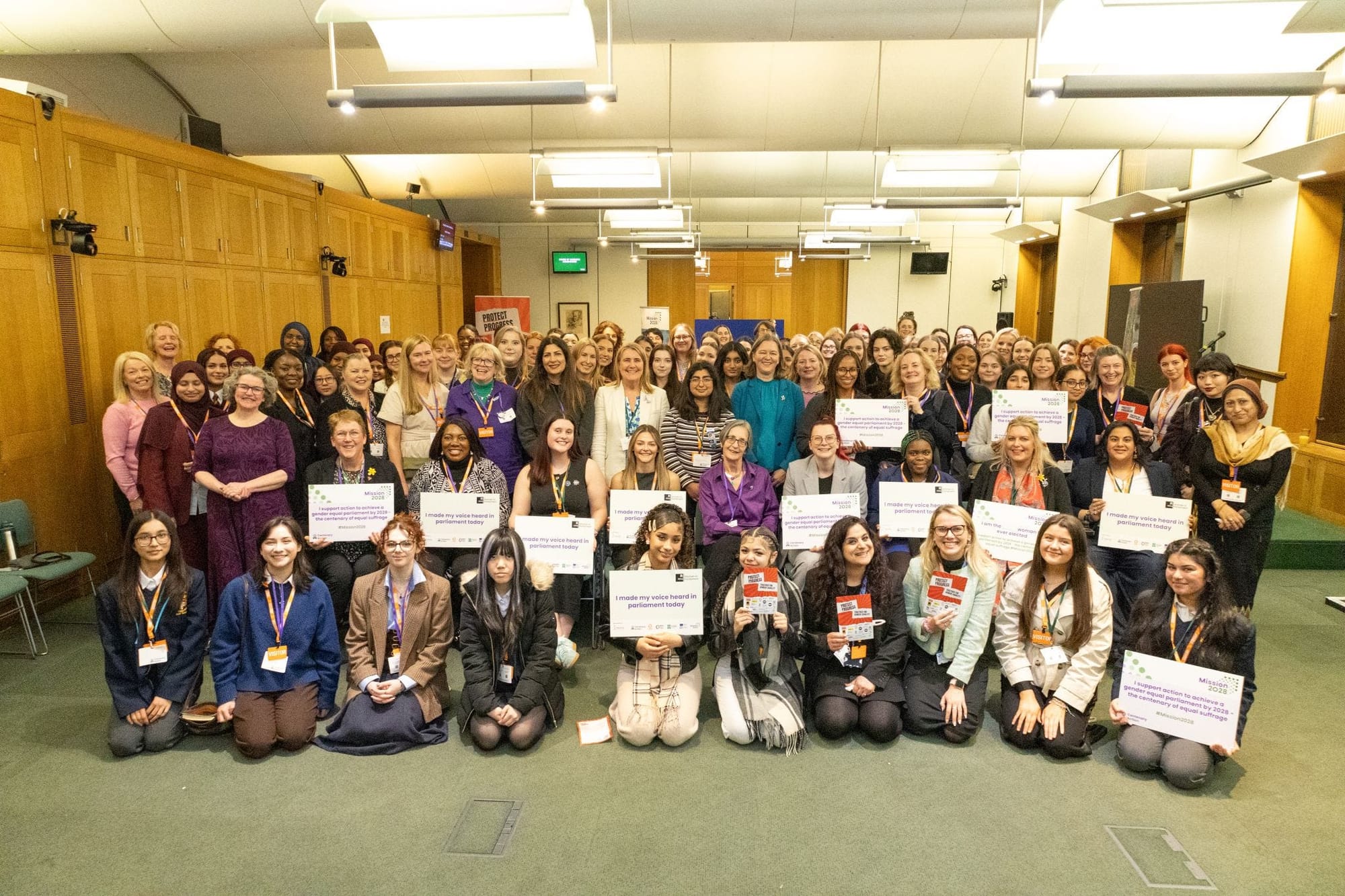
Inspiring future leaders in Parliament for International Women’s Day
Centenary Action, CARE International UK and the University of Roehampton’s G-EPIC EU Project held a special APPG Women in Parliament event for International Women’s Day 2026, connecting young women and girls with female MPs, peers and international women’s rights activists. Attendees from organisations including Young Women’s Trust, The Women’s Institute, UN Women UK, Shout Out UK, The Children’s Society, Inspiring Girls UK and Elect Her took part in small group discussions with APPG Co-Chairs Dawn Butler MP and Mims Davies MP, alongside Minister Seema Malhotra and other parliamentarians. The event explored different pathways into politics and encouraged young women to see Parliament as a place where they belong. As one MP said: “This place was not made for someone like me… so why try to fit into the system?”
Republic call for royal inquiry following arrest of disgraced royal
Republic is calling for an inquiry into the royal household, its secrecy, spending and wider influence, in the wake of the arrest of Andrew Mountbatten-Windsor. The campaign group also said the inquiry should investigate the complicity of government, civil service, police and the BBC in creating an environment of royal impunity.
Jo Cox Civility Commission publish new call to action on abuse and intimidation of elected representatives
The Jo Cox Civility Commission has published their second call to action on abuse and intimidation of elected representatives, this time focused on the devolved nations. The Commission has identified a range of recommendations across sectors — from central government, to policing, and social media. Whilst significant progress has already been made, they say, they are continuing to campaign for further action.
Hope Not Hate publish this year’s State of Hate report
State of HATE: It Could Happen Here is the latest annual comprehensive report by Hope Not Hate detailing the analysis of the British far right ecosystem. This year’s report carries a stark warning — The far right is more extreme, bigger and bolder than ever before. The report states that with Reform UK’s rise, growing street protests, and an increasingly hardline rhetoric are combining to reshape the political landscape, while public opinion is shifting and polarisation deepening.

Are you a councillor? Association of Democratic Services Officers want to hear from YOU
Association of Democratic Services Officers (ADSO) have launched a councillor survey and a series of councillor focus groups as part of their Working in a Modern Democracy programme to better understand how local officers can adapt to our evolving democracy. Find out more about the vital work of the ADSO.
Civic Punks ask: How do we make government better?
Derek Alton, former Apolitical Community Lead, Newspeak House alumni and Canadian civic tech/open data evangelist, is turning his attention to building a global network and channel for the people across the world working to innovate and make government better, to share their stories better and learn from one another.
Demos is recruiting a Chair of the Board
Demos is recruiting a new leader to succeed Dame Julie Mellor as Chair of the Demos Board. Check out more information about this exciting opportunity and apply by the 20th of March.
Our House is expanding
Join Our House, the new chartists and their campaign for a People’s Charter. They’re looking for an Operations Manager and Comms Manager — find out more and apply now.
Independent Forum for Scotland and Common Weal conference, 14 March
The Independence Forum Scotland, Common Weal and Yes United For Independence are joining forces to organise a Spring Conference on Scotland’s Future, to be held at the Òran Mòr in Glasgow on Saturday 14 March 2026.
Partnership announced to support Local Government Reorganisation
Anthony Collins, the Centre for Governance and Scrutiny (CfGS) and Collaborate CIC — are announcing an informal partnership to support councils on their road to local government reorganisation (LGR). If you’re leading, supporting or advising a place that’s entering LGR, they’d love to hear from you. Please get in touch with Ellen Care at Collaborate CIC.
New Citizens’ Assembly in Dunfermline meets to shape city’s future
A new citizen’s assembly in Dunfermline is offering 35 residents the chance to decide on the future of their city. Participation was allocated through a civic lottery with those involved keen to ensure the process leads to direct outcomes not simply a space for discussion. Read the Electoral Reform Society’s reflections on the assembly.
Citizens for Culture Roadshow goes on the road
Last year the Citizens’ Assembly for Culture met and set out a plan for culture in the West of England. Now, from February to May 2026, Citizens for Culture will run a series of roadshow conversations across the West of England, bringing citizens and a variety of cultural organisations together to explore what the Cultural Plan means in practice.
Traveller Movement — new briefing paper on intersecting inequalities
The Traveller Movement has published a new briefing paper, jointly with the Women’s Budget Group, Uneven Paths: Tackling Intersecting Inequalities Facing Romani (Gypsy), Roma and Irish Traveller Women.
1,000 students give their views on the role of AI in education
Between the 1st of November and the 15th of December, Connected by Data gathered the views of 1,000 students on how schools, government and AI firms should be approaching the role of AI in education. Whilst students see the ability of AI to enhance lessons they were also clear on the importance of student-teacher relationships and don’t want AI tools to be involved in personal, emotional or social support. Check out the full report or see their short video on the findings.
DemocracyNext is setting up The Assembly Commons
Two years ago DemocracyNext published an open-access guide on how to create a successful citizens’ assembly. The guide — Assembling the Assembly — has since been viewed over 30,000 times and has been translated into 4 languages. Now they want to turn the guide into an open-access knowledge hub: ‘The Assembly Commons’. If you have used their guide and have feedback on how to shape The Assembly Commons, get in touch.
Democratic Reform & Innovation 💡
Institute of Welsh Affairs takes a look back on 10 years of the Future Generations Act
The Institute of Welsh Affairs takes a look back over the last 10 years since the passage of the internationally groundbreaking Wellbeing of Future Generations Act in a new report. Authored by IWA Co-Director Joe Rossiter, the report makes a set of recommendations for the Office of the Future Generations Commissioner for Wales and the next Welsh Government.
Academics warn of distorted election results on ‘unprecedented scale’
Over 50 academics have written to the government warning that their failure to reform the voting system will lead to distorted election results on an ‘unprecedented scale’. The letter was coordinated by the All-Party Parliamentary Group for Fair Elections and campaign group Make Votes Matter.
Government announces strengthening of Electoral Commission role
Steve Reed, Secretary of State for Housing, Communities and Local Government, has announced that the government is to repeal in full the power for Government to impose a strategy and policy statement on the Electoral Commission, and to increase the maximum fines imposed by the EC from £20,000 to £500,000. Additionally, the government will legislate to protect election staff and officials.
Cooperation at the cutting edge, Research for Action investigates
Gloria Dawson of Research for Action met with the founders of the Cooperation Town Network (an association of 60 community food coops) and Cooperation Manchester, just a couple of examples of the new and exciting initiatives transforming communities as part of a new wave of the cooperative movement building community power. Read and listen to Gloria’s in-depth interviews with the groups.
Join Shared Future for upcoming webinar on Participatory Budgeting, 17 March
Shared Future will be running a one hour lunchtime introduction to Participatory Budgeting, focussed on Pride in Places. Taking place on Tuesday 17th March 2026, starting at 12.00pm. Book your place here. Take a deep dive into Shared Future’s latest thinking on Pride in Places and realising community power through participatory budgeting.
Dpart publish new research on youth barriers to electoral politics
In partnership with Bertelsmann Stiftung, the German Dpart think tank have released a new study Hurdles to the ballot box: Why voting is not a Given for young people. The study outlines the structural, individual and contextual barriers that make electoral participation more difficult for young people and is well worth translating to read in full.
New scheme will see £800m of local investment managed by local communities
The government’s new Pride of Place scheme, launched at the beginning of February, will give local people in 40 communities the opportunity to decide how £20m of funding is spent in their local area. The scheme is being advertised as a way to allow local communities to ‘take back control of their futures’, with the PM saying it is vital to ‘give power, agency and control to the very people who want to improve their community’.
Votes at 16 — chance for a reset? Asks Advocacy Academy’s Calum Green
Calum Green, Director of Organising and Campaigning at the Advocacy Academy, explores the potential impacts of lowering the voting age for young people and their relationship with democracy in the UK.
Home Office publishes White Paper on future of policing
A new White Paper published by the Home Office sets out wide-ranging reforms to the future of policing in the UK, including a new national level police force. The Institute for Government praised much of the Home Secretary’s reforms, but said that the plans could see significant power stripped away from local areas leading to less accountability.
Business leaders demand proportional representation to promote economic growth
In a letter to the Financial Times, over twenty business leaders called for the government to scrap the first-past-the-post voting system. Signed by the Chairman of Virgin Group and others, the authors state: ‘We consider that the electoral system no longer serves the interests of UK business in generating growth.’
New polling shows declining appetite for electoral reform
The latest polling from the National Centre for Social Research finds the appetite for changing the electoral system has fallen in the last year from 60% to 53%. The biggest decline comes from Reform UK voters (79% to 61%), who may now be aware that their party stands to benefit from first-past-the-post.
Andy Burnham praises devolution as blueprint for regional prosperity
In an op-ed for the Guardian, the Mayor of Manchester set out his stall on the importance of devolution as a blueprint for better regional governance and for overcoming ‘the four horsemen of Britain’s apocalypse’: deindustrialisation, privatisation, austerity and Brexit. Centre for Cities Chief Executive Andrew Carter spoke to the Greater Manchester Mayor in an interview last week about his vision for English cities.
Democratising the Media 📰
Competition and Markets Authority delays regulation of Google’s access to news markets
The Competition and Markets Authority (CMA) has postponed their efforts to regulate Google’s access to UK news markets by another year — a move which the Public Interest News Foundation claims will hurt local news providers. The regulation promised the opportunity for local news providers to negotiate with big tech firms for a share of the profits generated from their reporting, but this has now been put on hold by the delay.
Public Interest News Foundation announce this year’s Tenacious Journalist Award winners
Together with Changing Ideas, the Public Interest News Foundation announced this year’s Tenacious Journalist Award winners. In a highly competitive process with over 100 applications, 9 exceptional journalists have been chosen to receive a £10k award for their proposed projects including regular 1–2–1 support with a PINF staffer and monthly cohort calls.
Leicester Gazette publishes first print edition after two years
The Leicester Gazette is a fantastic example of a trailblazing award winning independent newspaper. Generating podcasts, regular local stories, local political impact and more than 200,000 unique regular readers. This winter it marked its first publication with 5,000 copies distributed across Leicestershire.
New standards for police will ensure faster communication with local media
The police have published new guidance to ensure forces can communicate effectively with the public and the media in the rapidly changing landscape of news consumption. The guidance recognises the vital role established media outlets play in informing local communities and pledges to build constructive and timely relationships with local outlets.
Tactical Tech is looking for partners to run training on investigative reporting
Tactical Tech wants to develop new resources and guidance for budding investigative journalists, including investigation guides, method tutorials and workshop curricula. They are looking for experienced journalists and researchers who can help develop this resource, focusing on areas including AI systems, the climate and information crisis, young people and big tech, and data mapping. Fill out an application form if you want to be part of this paid collaboration.
First ever Community Radio Week launched by radio network
From the 2nd to the 8th of February the UK Community Radio Network held a nationwide celebration of community radio. The week-long event brought together community stations from across the UK to spotlight the importance of community radio with hopes to become an annual event.
What would a community-first BBC look like?
With the landmark Charter-Review of the BBC underway, the Public Interest News Foundation has set out a new proposal that would put local people at the heart of the national broadcaster. Their six-part proposal recommends a new partnership agreement between the local news sector and the BBC to set the terms for how the work of local partners is used, as well as local news forums to inform this partnership.
New book — Bad Influence: How the Internet Hijacked Our Health
Deborah Cohen discussed their new book Bad Influence: How the Internet Hijacked Our Health at the APPG on Political and Media Literacy recently. Drawing on her experience as Science Editor at ITV News and Health Correspondent at BBC Newsnight, Deborah explores how algorithmic amplification with psychological biases such as fear-driven messaging, motivated reasoning and the Barnum effect, combine to create a potent influence environment with impacts on British politics.
Integrity & Transparency 📣
High Court overturns ‘unlawful’ Palestine Action ban
In a landmark case the High Court has overturned the government’s proscription of Palestine Action as a terrorist organisation, deeming their categorisation ‘unlawful’. The Co-founder of Palestine Action, Huda Ammori, said the ban had massively backfired and called for the organisation to be ‘de-proscribed’. Director of Liberty, Akiko Hart, welcomed the news but said the case exposes a deeper problem about the increasingly blurred line between direct action and terrorism in the eyes of the state. Hart called for a clear definition of terrorism to be outlined to ensure civil liberties and the right to protest in the UK are adequately protected. Please note Palestine Action is a proscribed organisation.

High Court upholds acquittal in Quran-burning case
The National Secular Society has welcomed the High Court’s refusal to overturn the quashing of the conviction of Hamit Coskun for burning a Quran. The court rejected an appeal from the Crown Prosecution Service to reinstate Coskun’s conviction of a religiously aggravated public order offence for burning a Quran in a protest. It said: “We are satisfied that the conclusions arrived at were rationally open to the court”.
Mandelson scandal prompts calls for strengthened accountability in government
The Mandelson scandal has highlighted the need to tighten the rules at the heart of government, says Open Britain. They say the scandal points to the need for four major reforms: swifter investigations to ensure abuses of power have real consequences, stronger vetting of major political appointments, a clear, enforceable mechanism to remove Peers following serious wrongdoing, and wider democratic reform to ‘stop the rot’ and ensure the public has trust in politicians.
Investigation reveals lobbying firm selling access to ministers for £30,000
An openDemocracy investigation reveals that a Labour-linked lobbying firm is selling access to government officials for up to £30,000. Arden Strategies and Startup Coalition sent out brochures for July’s Future of Tech Summit offering tiered packages of access, including being introduced to key policymakers and attending a ‘private post-conference tech dinner’.
Female Labour MPs call on Starmer to ‘end the boys club’ in government
Following the appointment of two men to high office with links to sex offenders, female Labour MPs are calling on Starmer to appoint a woman as First Secretary of State. The role has remained vacant since Starmer’s appointment, with Harriet Harman now urging the PM to use this as an opportunity to address misogyny at the heart of government.
Anti-SLAPP legislation must be included in King’s Speech, says 127-strong coalition
127 newspaper editors, lawyers, academics, campaigners and publishers have signed an open letter to the Prime Minister calling for anti-SLAPP legislation to be included in the next King’s Speech. They describe SLAPPs as a ‘society-wide issue’ that stifles protected speech and participation, calling on the government to implement a ‘society-wide solution’ to the problem.
15 activists arrested at Quaker’s Friends House in London
15 young activists belonging to new group Take Back Power were arrested in a raid on the London Quaker Meeting House. Take Back Power, which describes itself as a non‑violent civil resistance group, claimed responsibility for the Crown Jewels apple crumble stunt last year. A similar operation took place at the Quaker Meeting House last March, when six Youth Demand activists were arrested.
London’s Met Police four times more likely to arrest when restricting a protest
Network for Police Monitoring has analysed a new tranche of data released by the Home Office on policing in England and Wales. They found that the Metropolitan Police accounted for 73.5% of all uses of Sections 12 and 14 protest restriction powers in 2024–25 and carried out 92% of related arrests, making it more than four times as likely to arrest under these powers as forces elsewhere in England and Wales. It was also responsible for 100% of restrictions on processions.
Government must help young voters assess reliable information, says Full Fact
Full Fact and Internet Matters are calling on parliament to take steps to help younger voters critically assess reliable information online. With the government preparing to lower the voting age to 16, and with only half of 13–17 year olds saying they feel confident reliably assessing the reliability of information online, the organisations say the government needs to do more to allow younger voters to participate fully and confidently.
Banning social media is not the answer to online harm, say Index on Censorship
The Index on Censorship has called the government’s potential ban on social media for under 16-year-olds a ‘knee-jerk reaction’ that ought to be resisted. Despite agreeing with the need to address the harm caused by social media platforms, they argue that these platforms can be a lifeline for marginalised and isolated groups which can help ‘expose state violence, mobilise protest movements and even unseat autocrats.’
Man convicted after threatening to kill editor of local paper
A 34-year old man has been convicted after threatening to kill the editor of the Pembrokeshire Herald. A local man called the editor on a withheld number and issued a series of death threats to the editor and a local councillor over the publication of a recent article.
Pro-Democracy Tech
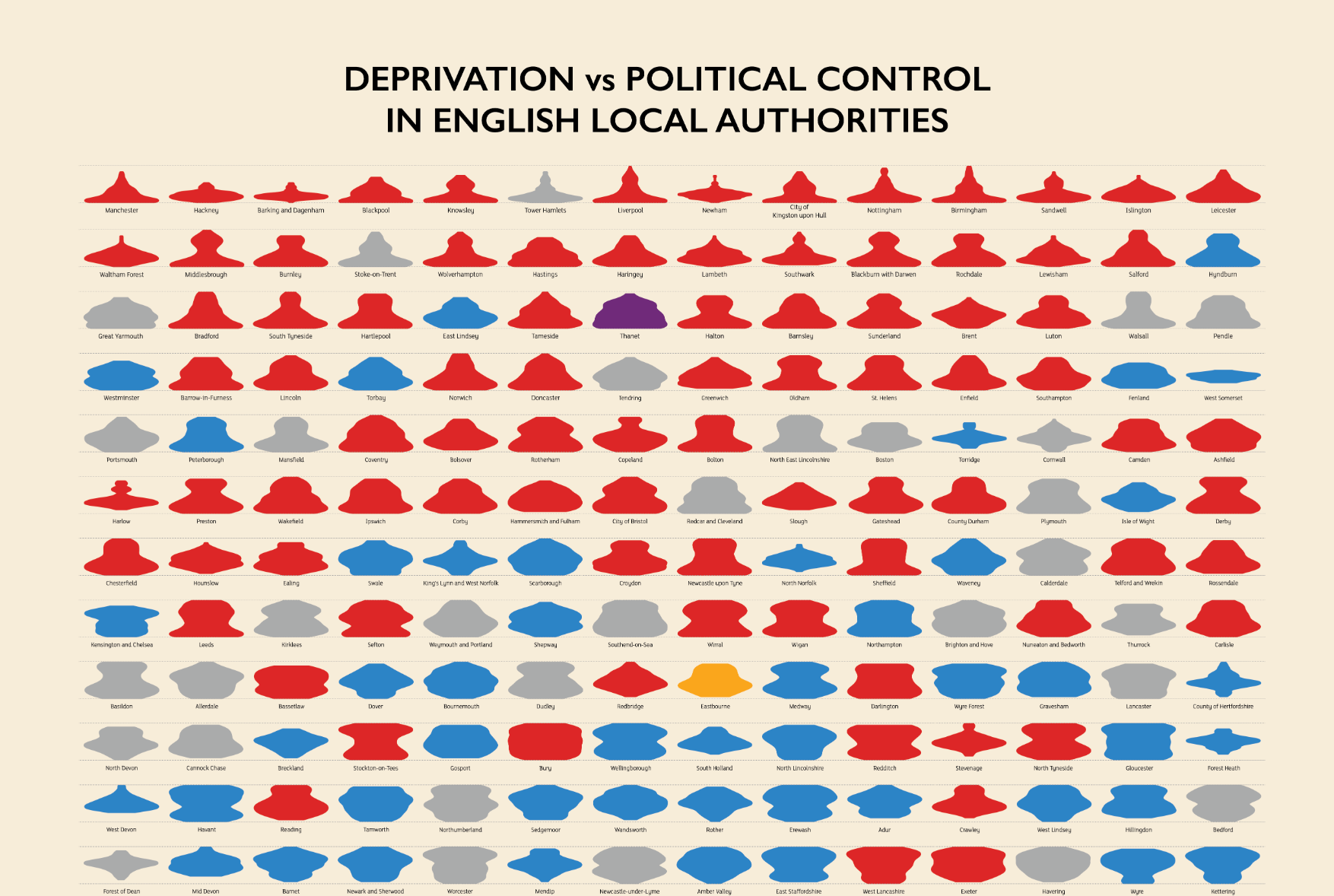
Open Data Manchester share their Deprivation vs Political Control posters
The brilliant posters produced by Open Data Manchester have already sold out, but you can print off your own copy via the free online image files of the posters. The posters display Index of Multiple Deprivation data against political control of English local authorities.
Open Knowledge Foundations marks Open Data Day 2026
On 11 March, the Open Knowledge Foundation (OKFN) is holding an online conference called ‘The Future of Open Data’. This event is an official activity for Open Data Day 2026 and marks the start of CKAN’s 20th anniversary celebrations.
Data and AI Public Engagement Community of Practice, 11 March
At 2pm next Wednesday, Connected by Data will be hosting the next meeting of the Data and AI Public Engagement network, focusing on the latest work and discussion on public participation and engagement around data and AI. Find out more.
Demos call for public participation in regulating AI
A new report by Demos titled A Declaration on Digital Rights: Embedding human rights in a new deal for the digital age outlines how the current lack of safeguards around the development and use of AI is leaving the public exposed to harm. In the report they set out five recommendations for how this emerging technology should be regulated, including ensuring that there is proper public participation within tech and AI governance decision-making.
And now for something completely different …
Debate in France sees possible movement towards direct democracy
The French Parliament has been seriously considering whether to hand significant power to its citizens. A proposal introduced by MP Marie Pochon calls for the introduction of three new democratic mechanisms: citizen-initiated constitutional amendments, the power for citizens to change laws before they take effect, and a legislative initiative to allow citizens to directly propose new laws. The French National Assembly is continuing to debate the proposals.
See you next time,
James, Max and the Democracy Network team
P.S. Help us make this Bulletin better. We’d love to hear what you think — share your feedback here.